
إذا ظهرت مشكلة لاحقًا في طلب لتغليف الأغذية، يحتاج المشتري إلى معرفة الكراتين والعينات والمستندات المرتبطة ببعضها. وفي عبوات رقائق الألومنيوم، يبدأ ذلك عادة بعناصر بسيطة: رمز التشغيلة، ورمز الصنف، وعلامات الكرتون، وقائمة التعبئة، وصور العينات، وتاريخ إصدار ملف ملامسة الغذاء.
أنجز ذلك قبل الشحن، لا بعد وصول البضاعة. يساعد ملف التتبع الواضح المستوردين على الإجابة عن أسئلة العملاء بسرعة، والتمييز بين تشغيلات الإنتاج، وتجنب التخمين عندما تُباع الصينية نفسها بأغطية أو ملصقات أو طرق تعبئة مختلفة.
لماذا يعد التتبع مهمة المشتري أيضًا، وليس المصنع وحده؟
ركزت الأخبار الحديثة عن ملامسة الغذاء مجددًا على مراجعات المواد، والإرشادات الرسمية، والاهتمام التنظيمي بالتغليف. هذه هي الخلفية العامة. أما المشكلة اليومية للمشتري فأبسط: هل يستطيع فريقك ربط الكراتين المشحونة بسجل المنتج المعتمد؟
قد يحتفظ المورد بسجلات إنتاج داخلية، لكنها لا ترافق الطلب التجاري دائمًا بطريقة يستطيع استخدامها المستودع وفريق المبيعات والعميل. ينبغي للمستوردين طلب بيانات التتبع الخاصة بالشحنة ضمن طلب عرض السعر، وفحصها قبل السماح بالشحن.
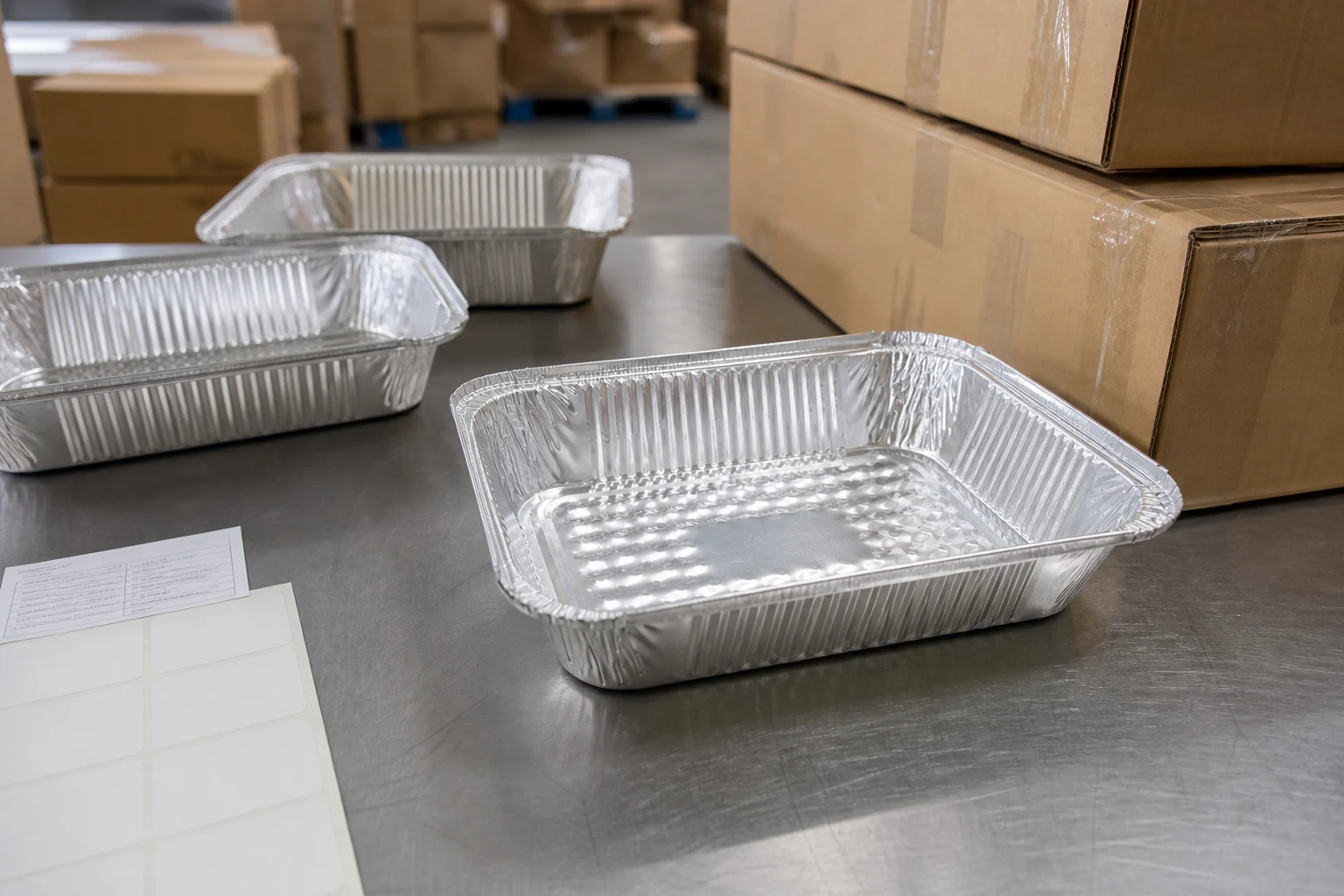
لتحديد سياق المنتج، اربط الطلب بنطاق FirstAlu المحدد من عبوات رقائق الألومنيوم (English)، بما فيه العبوات ذات الجدران الملساء (English) أو العبوات ذات الجدران المجعدة (English) إذا كان الطلب يشمل النوعين.
ما الذي ينبغي أن يظهر على علامات الكرتون؟
ينبغي أن تساعد العلامات على تحديد البضاعة دون فتح كل كرتون. لا تحتاج إلى تصميم متكلف، بل إلى الاتساق.
في معظم طلبات عبوات رقائق الألومنيوم، ينبغي تأكيد ما يلي:
- رمز الصنف لدى المشتري أو المورد
- مقاس الصينية أو سعتها أو مرجع الموديل
- نوع الغطاء إذا كان معبأً مع الصينية
- عدد القطع في العبوة الداخلية وكرتون التصدير
- رقم الكرتون أو نطاق أرقامه عند الحاجة
- الوزن الإجمالي والصافي وأبعاد الكرتون إذا كانت مستخدمة في سجلات الاستلام
- رمز التشغيلة أو تاريخ الإنتاج أو مرجع الدفعة المتفق عليه مع المورد
- علامة الوجهة أو العلامة الخاصة أو مرجع أمر شراء العميل عند اشتراطها
لا تنتظر التحميل النهائي لمناقشة علامات الكراتين. أدرج التنسيق المطلوب في أمر الشراء أو تعليمات التعبئة.
كيفية ربط رموز التشغيلات بالعينة المعتمدة
لا يكون رمز التشغيلة مفيدًا إلا إذا أمكن ربطه بالعينة المعتمدة ومستندات الشحن. اطلب من المورد الاحتفاظ بسجل صور للصينية والغطاء والكيس الداخلي وغلاف البيع، إن وُجد، وعلامات كرتون التصدير الخاصة بتشغيلة الإنتاج.
يكفي مجلد بسيط. احفظ فيه صورة العينة المعتمدة، وصورة عينة الإنتاج، وصورة علامات الكرتون، وقائمة التعبئة، والفاتورة، ومرجع مستند ملامسة الغذاء. سمّه برقم أمر الشراء ورمز الصنف وتاريخ الشحن. قد يبدو هذا عملًا روتينيًا، لكنه يمنع الكثير من المراسلات عندما يسأل موزع عن النسخة التي استلمها.
إذا أمكن تعبئة الصينية نفسها بغطاء ورقي أو بلاستيكي أو دون غطاء، فأنشئ سجلًا مستقلًا لكل طريقة تعبئة. فقد تتحول الصينية الواحدة إلى عدة أصناف تجارية مع تغير الغطاء والتعبئة.
ما الذي ينبغي مقارنته بقائمة التعبئة؟
قارن علامات الكراتين بقائمة التعبئة قبل الشحن. يجب أن يتطابق اسم الصنف ورمزه مع عرض السعر وأمر الشراء، وأن يطابق عدد القطع في الكرتون خطة التعبئة المعتمدة. وإذا تضمن الطلب عدة مقاسات أو خيارات أغطية، فيجب فصل البنود بوضوح يسمح للمستودع باستلامها بصورة صحيحة.
تحقق قبل السماح بالشحن من الآتي:
- هل يطابق رمز الصنف على الكرتون قائمة التعبئة؟
- هل يتوافق عدد الكراتين مع كمية الطلب؟
- هل فُصلت الأغطية أو المقاسات المختلفة بوضوح؟
- هل حُفظت صور عينات تشغيلة الإنتاج نفسها؟
- هل يطابق مرجع مستند ملامسة الغذاء وصف المنتج والمادة؟
- هل تحمل كراتين العلامة الخاصة العلامات التي طلبها العميل؟
ولمراجعة المورد بصورة أوسع، تندرج صفحتا FirstAlu عن الجودة والشهادات والأسئلة الشائعة للمشترين ضمن مسار الشراء نفسه، لكنهما لا تغنيان عن فحوص كل شحنة.
اجعل علامات الكرتون بسيطة ومقروءة
علامات الكرتون ليست نصًا إعلانيًا. تجنب ازدحامها بادعاءات يصعب التحقق منها أو يصعب على موظفي المستودع قراءتها. غالبًا ما تكون العلامة الواضحة التي تتضمن رمز الصنف والكمية وعدد الكراتين ومرجع أمر الشراء والوجهة وبيانات التشغيلة أنفع من صندوق مليء بالشعارات.
إذا احتاجت عبوة البيع إلى ادعاءات تسويقية، فراجعها ضمن تصميم الملصق. وإذا احتاج كرتون التصدير إلى التتبع، فلتبقَ بياناته تشغيلية. هاتان مهمتان مختلفتان.
كيف يدرج المشتري هذه المتطلبات في طلب عرض السعر؟
استخدم صياغة واضحة، مثل:
يرجى تقديم مقترح علامات الكرتون، وتنسيق رمز التشغيلة، ونموذج قائمة التعبئة، وسجل صور عينات الإنتاج قبل الشحن. يجب أن تتوافق العلامات مع رمز الصنف في أمر الشراء، ومقاس الصينية، وخيار الغطاء، وكمية الكرتون، ومرجع العميل.
أرفق نموذج عميلك إذا كان موجودًا. وإلا فاطلب نموذجًا لعلامات الكرتون مع عرض السعر، وأكد النسخة النهائية قبل بدء تعبئة الإنتاج.
متى تطلب مساعدة FirstAlu؟
اسأل مبكرًا إذا كان الطلب يشمل عدة مقاسات، أو أغطية متعددة، أو أغلفة بيع، أو كراتين بعلامة خاصة، أو منصات تحميل مختلطة. يمكن أن تظل التفاصيل بسيطة، لكنها تحتاج إلى توثيق قبل تعبئة الإنتاج.
أرسل قائمة الأصناف، وخيارات الأغطية، والكمية، وسوق الوجهة، وتنسيق أمر شراء العميل، وتفضيلات علامات الكراتين، وأي متطلبات استلام لدى المستودع أو متجر التجزئة. بذلك يحصل فريقا المبيعات والتعبئة على هدف عملي واضح.
الأسئلة الشائعة
هل يلزم رمز تشغيلة لكل طلب من عبوات رقائق الألومنيوم؟
تختلف المتطلبات بحسب المشتري والسوق وقناة البيع. وحتى إن لم يُشترط رمز تشغيلة رسمي، ينبغي الاحتفاظ بمرجع إنتاج يربط الكراتين والعينات وقائمة التعبئة والمستندات.
ما الفرق بين علامات الكرتون وملصق البيع؟
تساعد علامات الكرتون فرق المستودع والخدمات اللوجستية على تحديد الشحنة. أما ملصق البيع فيخاطب المستهلك النهائي، وقد يشمل العلامة التجارية وتعليمات الاستخدام والباركود واللغة المحلية. لا ينبغي أن يحل أحدهما محل الآخر.
هل تحتاج تغييرات الغطاء إلى سجلات تتبع مستقلة؟
نعم. قد تتطلب الصينية ذات الغطاء الورقي أو البلاستيكي أو الألومنيوم، أو دون غطاء، ملفات عملاء مختلفة. سجّل خيار الغطاء مع الصينية وعلامات الكرتون وقائمة التعبئة.
ما الصور التي ينبغي أن يرسلها المورد قبل الشحن؟
اطلب صورًا للصينية، والغطاء إن كان مشمولًا، والتعبئة الداخلية، وعلامات كرتون التصدير، وتحميل الكراتين، وعينة إنتاج من الطلب. يجب أن ترتبط الصور برمز الصنف وبند أمر الشراء.
خلاصة للمستوردين
يكون التتبع أسهل عندما يُخطط له ضمن الطلب منذ البداية. اتفق على علامات الكرتون، وتنسيق رمز التشغيلة، وحقول قائمة التعبئة، وصور العينات، وإصدار المستندات قبل الشحن. وإذا سأل العميل لاحقًا، ينبغي أن يتمكن فريقك من العثور على الكرتون وسجل المنتج المحددين دون تخمين.