
أصبحت تقارير التغليف مسألة فعلية في مشتريات مستوردي عبوات الأغذية. يستطيع المورد تقديم أسعار الصواني والأغطية، لكن المستورد قد يحتاج لاحقًا إلى بيانات التغليف من أجل مسؤولية المنتج الممتدة، أو إجراءات الاعتماد لدى متاجر التجزئة، أو التقارير المحلية. وجمع هذه البيانات أسهل كثيرًا قبل الشحن.
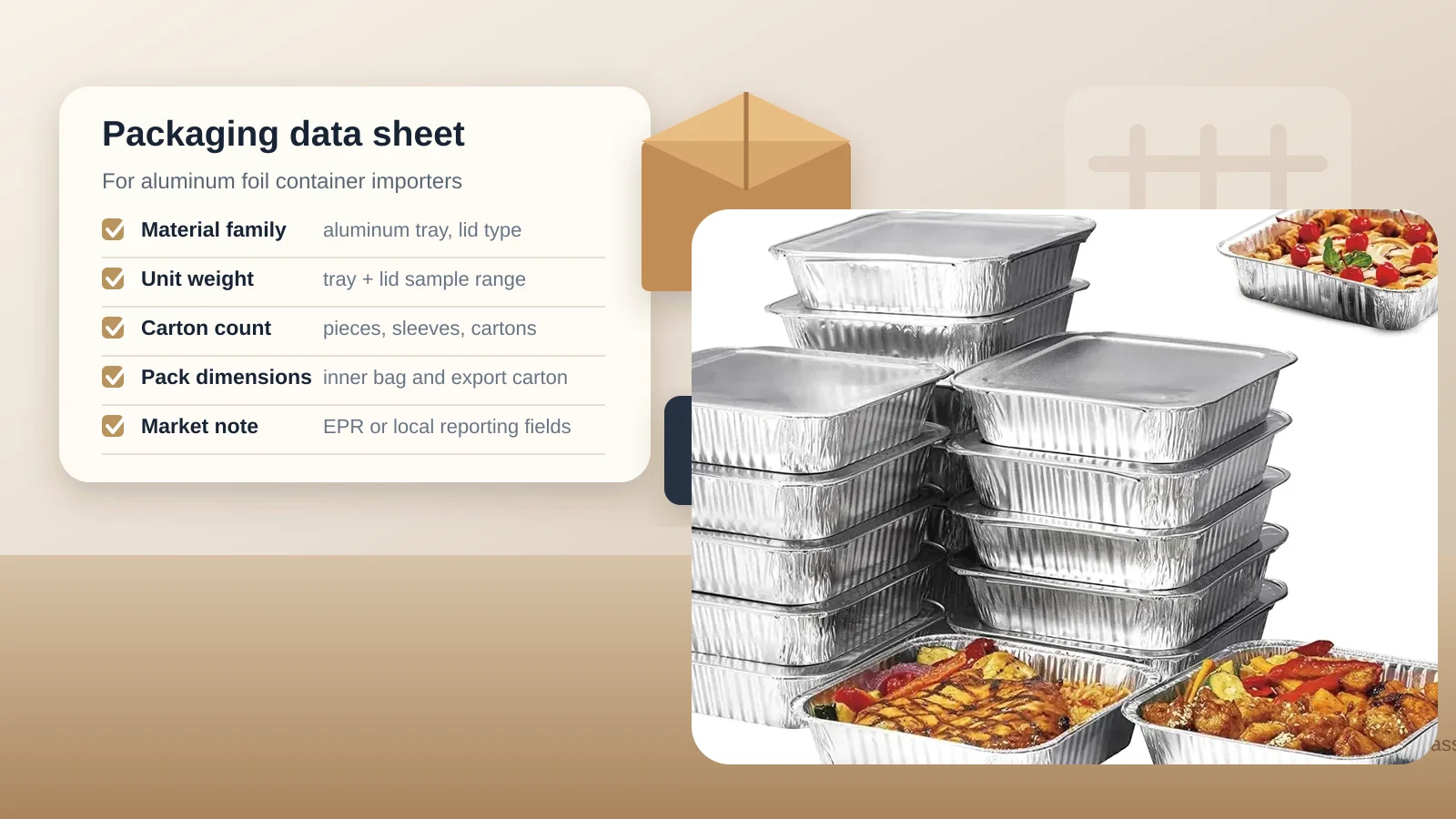
في عبوات رقائق الألومنيوم، اطلب من المورد ورقة بيانات بسيطة تشمل الصينية والغطاء والتعبئة الداخلية وكرتون التصدير وأي تغليف خارجي. اجمع، على الأقل، فئة المادة ووزن الوحدة وعدد القطع وأبعاد الكرتون والوزنين الإجمالي والصافي وسجل عينة أو صور يطابق الصنف المشحون.
لماذا ينبغي إدراج بيانات التغليف في طلب عرض السعر؟
يتعامل كثير من المشترين مع مسؤولية المنتج الممتدة أو تقارير التغليف كعمل مكتبي يمكن تأجيله حتى وصول البضاعة. وهذا يولد عملًا يمكن تجنبه. فعندما تصل الشحنة إلى المستودع، قد لا يملك فريق المشتريات في مكان واحد عينة الصينية الدقيقة، وعينة الغطاء، والكيس الداخلي، وملصق الكرتون، وقائمة تعبئة المورد.
أدرج طلب البيانات ضمن طلب عرض السعر بدلًا من ذلك. لا يلزم أن يكون معقدًا. أضف عبارة قصيرة مثل: «يرجى تقديم بيانات تغليف الصينية والغطاء والكيس الداخلي وكرتون التصدير وتعبئة منصة التحميل، حيث تتوفر». ثم أرفق نموذج السوق إذا كان بلدك أو عميلك يستخدم نموذجًا محددًا.
يفيد ذلك خصوصًا في الطلبات المختلطة التي تشمل صواني ملساء ومجعدة، وأغطية ورقية وبلاستيكية، وكميات مختلفة في الكراتين. لا يكفي عرض سعر يقول فقط «عبوة ألومنيوم» لإعداد التقارير.
صفحات منتجات ذات صلة: عبوات رقائق الألومنيوم (English)، والعبوات ذات الجدران الملساء (English)، والعبوات ذات الجدران المجعدة (English).
ما البيانات التي يطلبها المستورد أولًا؟
ابدأ بالحقول المستقرة التي يسهل على المورد تأكيدها. طلب كل شيء دفعة واحدة قد يؤدي إلى رد بطيء أو غير متسق.
اطلب الأساسيات التالية أولًا:
- رمز المنتج أو مرجع الصنف المستخدم في عرض السعر
- فئة مادة الصينية، وغالبًا تكون رقائق الألومنيوم لجسم العبوة
- مادة الغطاء، مثل الورق أو الألومنيوم أو البلاستيك أو غشاء الإغلاق
- وزن وحدة الصينية والغطاء، كل منهما على حدة إن أمكن
- عدد القطع في الكيس أو الغلاف الداخلي
- عدد القطع في كرتون التصدير
- أبعاد كرتون التصدير
- الوزن الإجمالي والصافي لكل كرتون
- صورة علامات الكرتون أو ملصقه إذا احتاج العميل إلى التتبع
- نموذج قائمة تعبئة للصنف الوارد في العرض
لا تعتمد على رقم موحد إذا كان المنتج يضم عدة مواد. فالصينية الألومنيوم مع غطاء ورقي وكيس داخلي بلاستيكي ليست فئة مادية واحدة. افصل مكوناتها في السجلات.
افصل المنتج عن تغليف الشحن
من الأخطاء الشائعة خلط بيانات المنتج وبيانات تغليف الشحن في السطر نفسه. قد يحتاج فريقك إلى كليهما للتقارير، لكنهما ليسا الشيء ذاته.
للمنتج، سجّل الصينية والغطاء. وللشحنة، سجّل الكيس الداخلي والغلاف والكرتون وفيلم لف المنصة وواقيات الزوايا وأي ملصقات أو مواد مرفقة مستخدمة في الطلب. وإذا انتقل المشتري لاحقًا من التعبئة بالجملة إلى عبوات البيع بالتجزئة، تتغير البيانات أيضًا.
يمكن استخدام بنية بسيطة:
- وحدة البيع: صينية واحدة، أو صينية بغطاء، أو عبوة بيع بالتجزئة
- التعبئة الداخلية: غلاف محيط، أو كيس بلاستيكي، أو شريط ورقي، أو علبة بيع
- كرتون التصدير: أبعاده ووزنه وعدد الوحدات فيه
- تعبئة المنصة: نوع المنصة، وفيلم اللف، وواقيات الزوايا، وعدد الكراتين لكل منصة إذا استُخدمت
احتفظ بهذه البنية في ملف التوريد. فهي تسهل مقارنة الموردين، لأنها تبين ما إذا كان عرضا السعر يستخدمان فعلًا طريقة التعبئة نفسها.
كيفية فحص بيانات المورد قبل الإنتاج
لا تنتظر قائمة التعبئة النهائية لاكتشاف اختلاف. أثناء اعتماد العينات، اطلب وزن عينة الصينية والغطاء كلًا على حدة وإرسال صورة واضحة لقراءة الميزان. ويمكنك وزن العينات بنفسك عند استلامها. ليس لازمًا تطابق الرقمين حتى آخر منزلة عشرية، لكن ينبغي مناقشة أي فرق كبير قبل الإنتاج بكميات كبيرة.
ولبيانات الكرتون، اطلب خطة تعبئة قبل الإنتاج توضح القطع في كل غلاف تجميعي، والأغلفة في الكرتون، وأبعاده، ووزنه التقديري. وإذا وجدت عدة خيارات للأغطية، فاطلب بندًا منفصلًا لكل نوع.
هذا أيضًا الوقت المناسب لفحص توافق التعبئة المعروضة مع المستودع وخطة الشحن. فقد تصبح الصينية الرخيصة للوحدة أقل جاذبية إذا كان عدد القطع بالكرتون منخفضًا أو كانت الكراتين تستنفد حجم التحميل المتاح بسرعة.
ولمراجعة الشراء بصورة أوسع، راجع الجودة والشهادات (English)، وملف المورد (English)، والأسئلة الشائعة للمشترين (English).
ماذا تطلب إذا كان لدى العميل نموذج للتقارير؟
قد تطلب متاجر التجزئة والموزعون والأنظمة الوطنية البيانات بتنسيق خاص. أرسل النموذج إلى المورد مبكرًا. لا تختزله في عبارة مبهمة مثل «مستندات بيئية» أو «شهادة مسؤولية المنتج الممتدة». ففي حالات كثيرة، لا يشهد المورد باستيفاء التزامك؛ بل يقدم حقائق المنتج والتغليف لتمكين المستورد من إعداد التقرير بصورة صحيحة.
إذا كان النموذج طويلًا، حدد الحقول التي يستطيع المورد الإجابة عنها بصورة معقولة، وتلك التي تخص المستورد. فالمورد يستطيع عادة تقديم وزن الصنف ومادته وتعبئته بالكرتون وصوره. أما المستورد فيتولى عادة التسجيل في السوق، والرسوم المحلية، وبوابات التقارير الوطنية، وبيانات حساب العميل الخاصة.
يمنع هذا التقسيم كثيرًا من الالتباس، كما يمنع المورد من تخمين حقول لا يتحكم فيها.
قائمة بيانات مسؤولية المنتج الممتدة لطلبات عبوات الألومنيوم
استخدم القائمة قبل تأكيد أمر الشراء:
- أكد رمزي الصنف الدقيقين للصينية والغطاء
- سجّل مادتي الصينية والغطاء منفصلتين
- اطلب وزن وحدة الصينية والغطاء والكيس الداخلي وكرتون التصدير حيث يتوفر
- أكد عدد القطع في الغلاف التجميعي، والأغلفة بالكرتون، والكراتين بالمنصة عند استخدامها
- احفظ أبعاد الكرتون ووزنيه الإجمالي والصافي
- احتفظ بصور العينات والميزان وعلامات الكرتون في مجلد الطلب
- طابق ورقة البيانات مع الفاتورة الأولية وقائمة التعبئة
- أعد الفحص إذا تغير الغطاء أو سماكة الصينية أو عبوة البيع أو عدد القطع بالكرتون
تساعد عادة صغيرة: ضع تاريخ إصدار لورقة البيانات. فإذا تغير الغطاء الورقي إلى بلاستيكي، أو انتقلت التعبئة من الكراتين بالجملة إلى عبوات البيع، فلا يُعاد استخدام الورقة القديمة بالخطأ.
ما الادعاءات التي ينبغي تجنبها دون دليل؟
احذر الادعاءات العامة. لا تطلب من المورد كتابة «متوافق مع مسؤولية المنتج الممتدة» إلا إذا عرفت المعنى الدقيق لذلك في سوقك. ولا تعتبر «قابلًا لإعادة التدوير» و«يحتوي على مواد معاد تدويرها» و«خالٍ من البلاستيك» و«قابلًا للتحول إلى سماد» و«مستدامًا» كلمات مترادفة. إنها ادعاءات مختلفة، وتتطلب بعض الأسواق أدلة أو صياغة محددة.
بالنسبة لعبوات الألومنيوم، من الأكثر احتياطًا إبقاء البيانات واقعية: المادة والوزن والمقاس والتعبئة ومستندات ملامسة الغذاء الداعمة. وإذا احتاج العميل إلى ادعاءات بيئية، فاسأله عن الأدلة المطلوبة، وتأكد من أن المنتج وقواعد السوق يدعمان تلك الصياغة.
الأسئلة الشائعة
هل تقديم تقارير مسؤولية المنتج الممتدة مسؤولية المورد؟
عادة يقع الالتزام على المستورد أو مالك العلامة أو الموزع أو البائع في السوق المستهدف. ويمكن للمورد المساعدة بتقديم بيانات دقيقة عن المنتج والتغليف. اطلب حقائق، لا استنتاجات قانونية عامة.
هل ينبغي تسجيل وزن الصينية والغطاء منفصلين؟
نعم، فقد يستخدمان مادتين مختلفتين. يساعد الفصل في تحسين التقارير اللاحقة ومقارنة خيارات الأغطية.
هل تقرير اختبار ملامسة الغذاء هو نفسه بيانات التغليف لمسؤولية المنتج الممتدة؟
لا. يقدم تقرير اختبار ملامسة الغذاء أدلة داعمة للسلامة الغذائية ومطابقة المواد. أما تقارير مسؤولية المنتج الممتدة أو التغليف فتحتاج عادة إلى بيانات المادة والوزن والتعبئة وبيانات خاصة بالسوق. احتفظ بكليهما في ملف الطلب.
متى ينبغي طلب بيانات التغليف؟
أثناء طلب عرض السعر أو اعتماد العينات. الانتظار إلى ما بعد الشحن يصعّب تأكيد تفاصيل الصينية والغطاء والتعبئة الداخلية والكرتون بدقة.
ما التغييرات التي تتطلب فحصًا جديدًا للبيانات؟
أعد الفحص عند تغير سماكة الصينية، أو نوع الغطاء، أو تعبئة البيع، أو القطع بالكرتون، أو أبعاد الكرتون، أو تعبئة المنصة. حتى التغيير الصغير قد يؤثر في حقول التقرير.
خلاصة للمستوردين
يسهل جمع بيانات التغليف بينما لا يزال المورد يعد عرض السعر والعينات وخطة التعبئة. أدرج الطلب في طلب عرض السعر، وافصل بيانات الصينية والغطاء والتعبئة الداخلية والكرتون والمنصة. احفظ الصور وتواريخ الإصدارات. وبذلك يحصل فريق المطابقة أو العمليات على ملف أوضح عند الحاجة إلى تقارير مسؤولية المنتج الممتدة أو تقارير متاجر التجزئة أو التقارير المحلية.
إذا كنت تعد طلب عرض سعر لعبوات الألومنيوم، فأرسل إلى FirstAlu المقاس، وخيار الغطاء، والسوق المتوقع، وتفضيلات التعبئة بالكرتون، وأي نموذج تقارير لدى العميل. يمكن للفريق المساعدة في تجهيز تفاصيل المنتج والتعبئة للمراجعة.