A low price per roll says little until you know what the roll can cover. A wider roll may fit a particular tray in one piece, while a narrower one may leave less waste on a smaller job. Start with your regular task and compare measurable specifications before relying on labels such as “heavy duty” or “premium.”
1. Measure the sheet your task needs
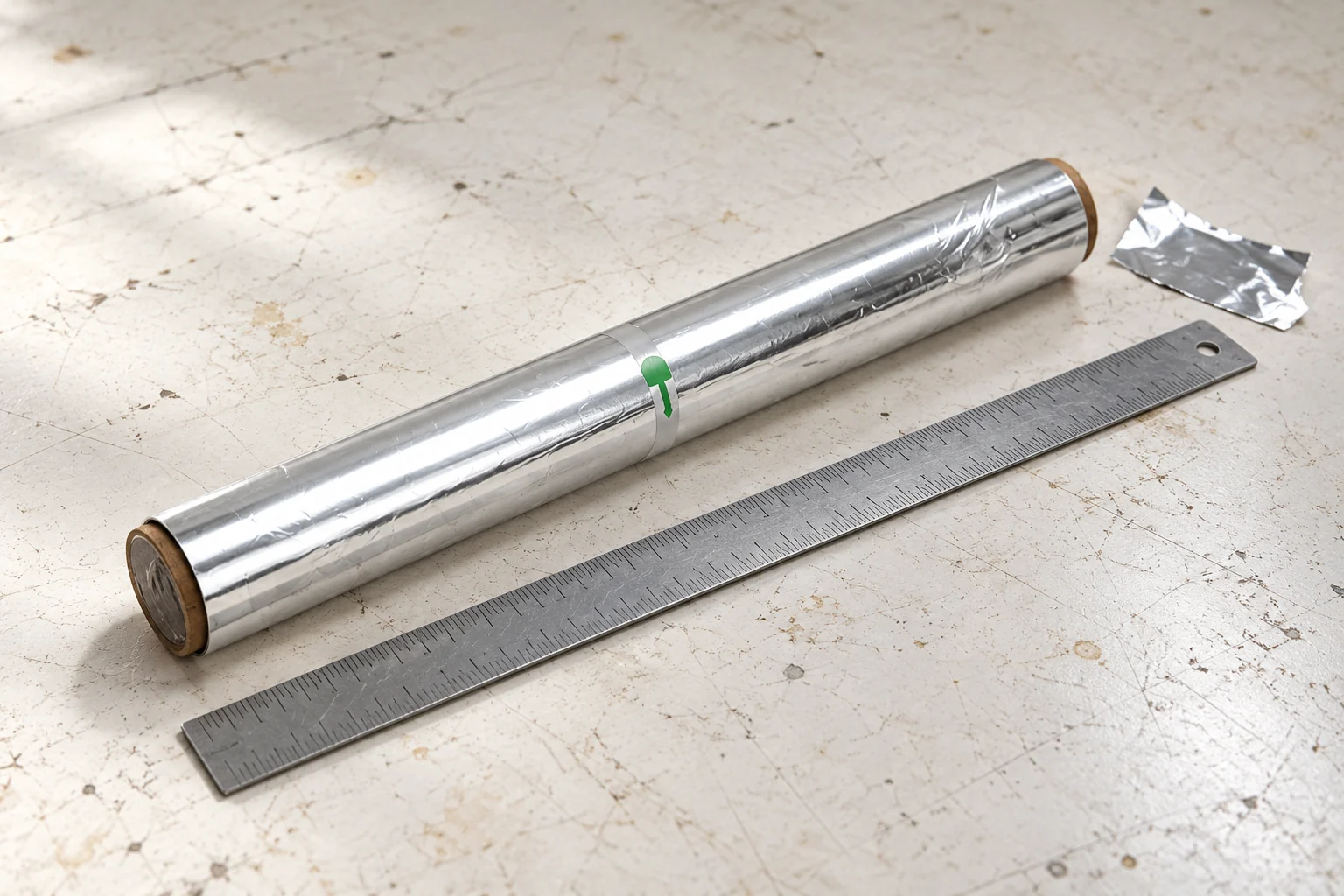
Measure the required sheet width and cut length, including the overlap or fold your wrapping method needs. For a tray, check the complete covering arrangement rather than only the dimensions of its base. Write the finished sheet size beside the job description.
Then compare it with the roll's stated width and usable length. A roll's total area is width multiplied by length, using the same units. But area alone does not establish fit: two narrow pieces are not automatically an acceptable substitute for one sheet of the required width. Avoid comparing roll prices while silently changing the wrapping method.
2. Read thickness as a measurement
Look for thickness in micrometres, also called microns, and any stated tolerance. One micrometre is 0.001 millimetre; check the unit before comparing numbers. Do not assume that a marketing category represents the same thickness across suppliers.
Thickness is one comparison variable, not a complete prediction of performance. If alloy or temper is specified, retain that information when comparing samples, and ask for a plain-language explanation of its relevance to the intended use. A material designation alone does not establish food-contact suitability or tell you how well the foil will dispense, fold or resist tearing in your task. Record those observations in a practical trial.
3. Check the dispenser, not just the foil
Check the roll width, outer diameter and core arrangement against the dispenser's instructions. A roll can have the desired sheet width and still fail to fit the holder. Confirm how it loads and how the cutter is intended to be used; do not modify the cutter or dispenser to accommodate an incompatible roll.
Try repeated cuts at the length your job needs. Count sheets that tear, become difficult to use or require a second cut. Notice whether staff can find the leading edge and cut consistently. These observations help compare the actual workflow; they are not a basis for an unmeasured claim that one roll is faster.
4. Identify any coating and the intended use
Read the exact product's food-contact and use instructions, including restrictions on foods, appliances and heating conditions. Do not infer a non-stick treatment from a dull or patterned appearance. Reynolds, for example, says either side of its ordinary foils can be used, while its named non-stick product has a designated food-facing side. That manufacturer's distinction does not establish a coating or performance claim for another brand. Reynolds foil guide
For a coated foil, identify the treatment and follow its instructions rather than borrowing the conditions for an uncoated roll. A general “food grade” description is not a substitute for documentation covering the actual product and intended use. No universal purity, certification or temperature limit is assumed here.
5. Calculate useful coverage, then check it in practice
Here is a hypothetical comparison, not a FIRSTALU specification or quotation. Suppose your job needs a sheet 0.30 m wide and 0.40 m long, with the required overlap already included:
- Roll A: 0.30 m × 100 m, price 12 currency units. Nominal area: 30 m². At 0.40 m per cut, it provides 250 sheets before losses: 0.048 currency units per sheet.
- Roll B: 0.45 m × 100 m, price 15 currency units. Nominal area: 45 m². If used at full width with the same cut length, it also provides 250 sheets before losses: 0.060 currency units per sheet. The extra width does not produce more sheets for this stated method.
In this example B costs less per square metre, but more per sheet used for the job. If the task instead requires 0.40 m of width, A does not fit in one piece. A change in required dimensions can change the decision.
Finally, replace the theoretical sheet count with the count of acceptable sheets from your trial, allowing for damaged starts, tears and unusable remnants. Divide the roll price by that count. Keep the dimensions, product reference and trial notes together so the next purchase compares the same task, rather than just the same-looking box.