
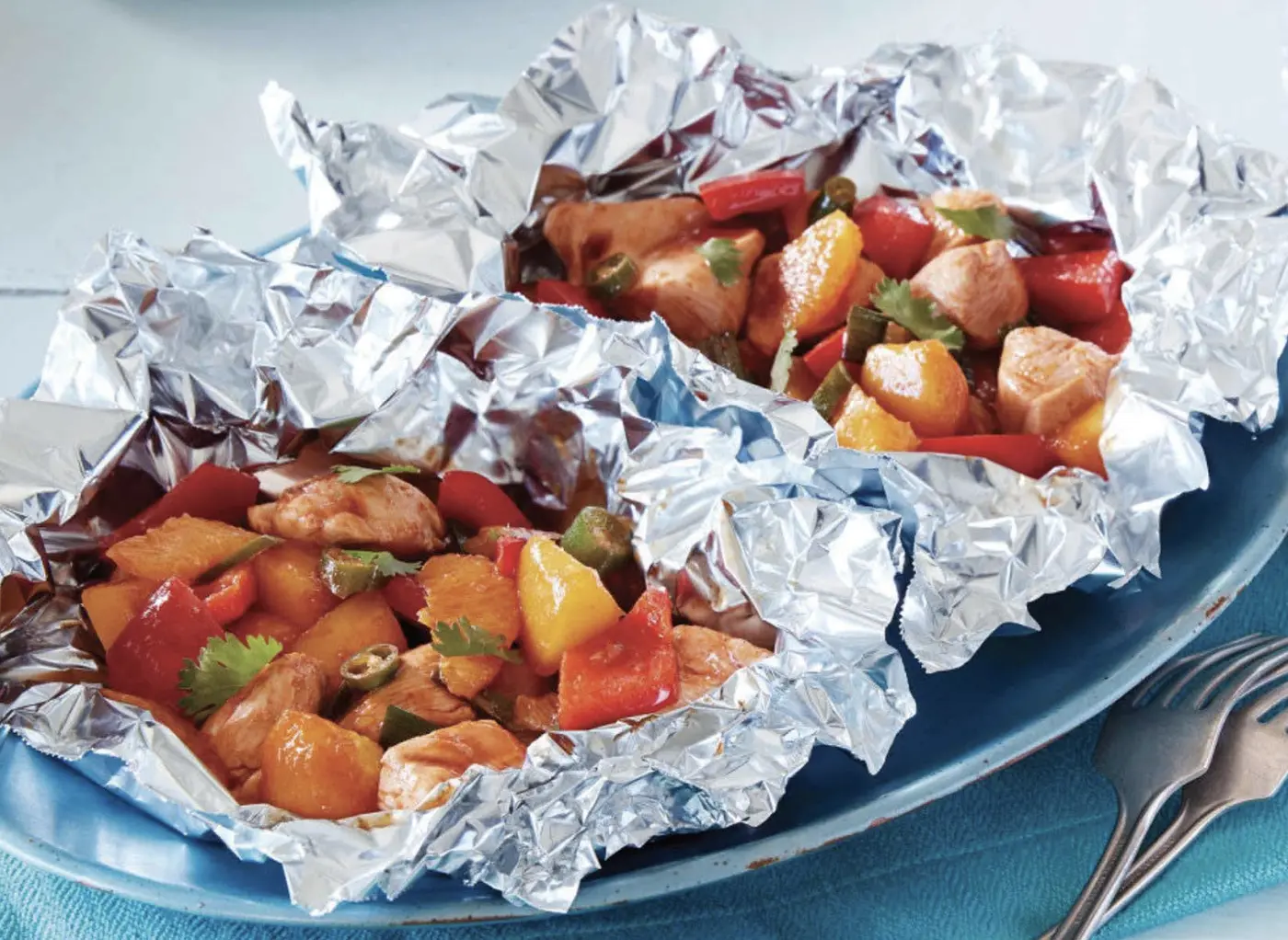
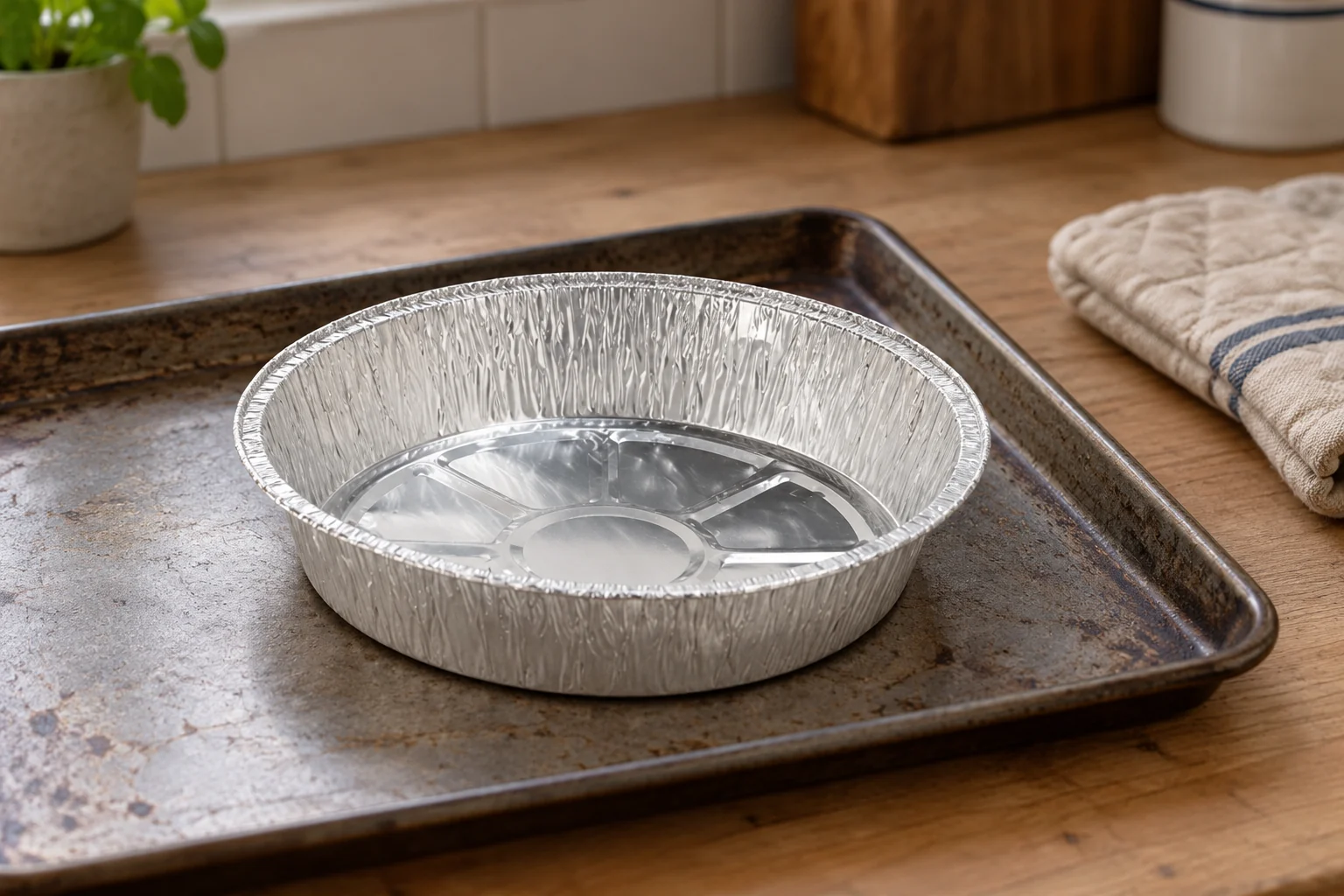
A disposable baking tray can be useful when taking a dish to a gathering or preparing portions ahead. Make the decision around the meal, the appliance and the exact pan. Its appearance alone cannot tell you its load, temperature or storage limits.
1. Choose the size before filling
Compare the recipe’s pan dimensions and depth with the tray’s usable interior, not just its outer rim. Check that the pan and any required support fit your oven as instructed. A similarly named tray may have different dimensions or a different coating. Keep the product directions, especially when separating a multipack.
Check the intended food and heating method. If you cannot establish suitability, use cookware with instructions covering your meal instead. This guide supplies no universal temperature limit for FIRSTALU trays.
2. Arrange support before moving food
Read the pan’s lifting instructions before filling it. Reynolds, for example, advises supporting disposable pans with a reusable baking sheet when moving them. Manufacturer guidance That example does not establish instructions for another brand.
For your pan, arrange the specified support and a clear landing space before cooking. Do not discover how you will lift a full tray while standing at an open oven. Follow the appliance’s placement requirements as well as the pan’s directions; a support requirement is not permission to block the oven’s airflow.
3. Treat the lid as a separate component
Identify whether each lid, film, sleeve and carrier is for storage, transport or heating. Reynolds explicitly excludes the lid supplied with its named pan-and-carrier product from the oven. Product instructions Your own packaging needs its own answer.
Remove components that are not authorized for the intended heating method. If the recipe calls for a cover, use a covering arrangement permitted by both the cookware and appliance instructions. Do not infer microwave or grill suitability from an oven-use label.
4. Cook the recipe, not the marketing promise
Use the recipe’s cooking and doneness checks. A metal tray does not guarantee even results, and a different pan depth is not a reason to assume the same cooking time. For an unfamiliar pan, choose a manageable first batch and record the recipe, quantity and result for your next attempt. This is a cooking note, not a safety certification.
5. Plan leftovers and transport
Health Canada advises prompt refrigeration in shallow containers and discarding cooked food left at room temperature over two hours. Leftover guidance A deep baking pan need not be the storage container: transfer portions to suitable containers when needed.
Check freezing instructions for both tray and closure. Freezer suitability alone does not authorize direct freezer-to-oven heating. Keep food-handling and reheating directions with any meal you give someone else.
For transport, use the specified support or carrier and closure method. A fitted lid is not proof of a leak-proof package or temperature control. Follow the food-handling requirements for the journey rather than relying on the tray to keep the meal hot or cold.
6. Finish with the right disposal decision
Do not assume a disposable tray is intended for washing and reuse. Follow its instructions. For disposal, check your collection service’s rules for the tray and lid separately, including food-residue requirements. Before your next bake, the useful checklist is short: suitable pan, suitable cover, planned support, recipe checks and a storage plan.

