
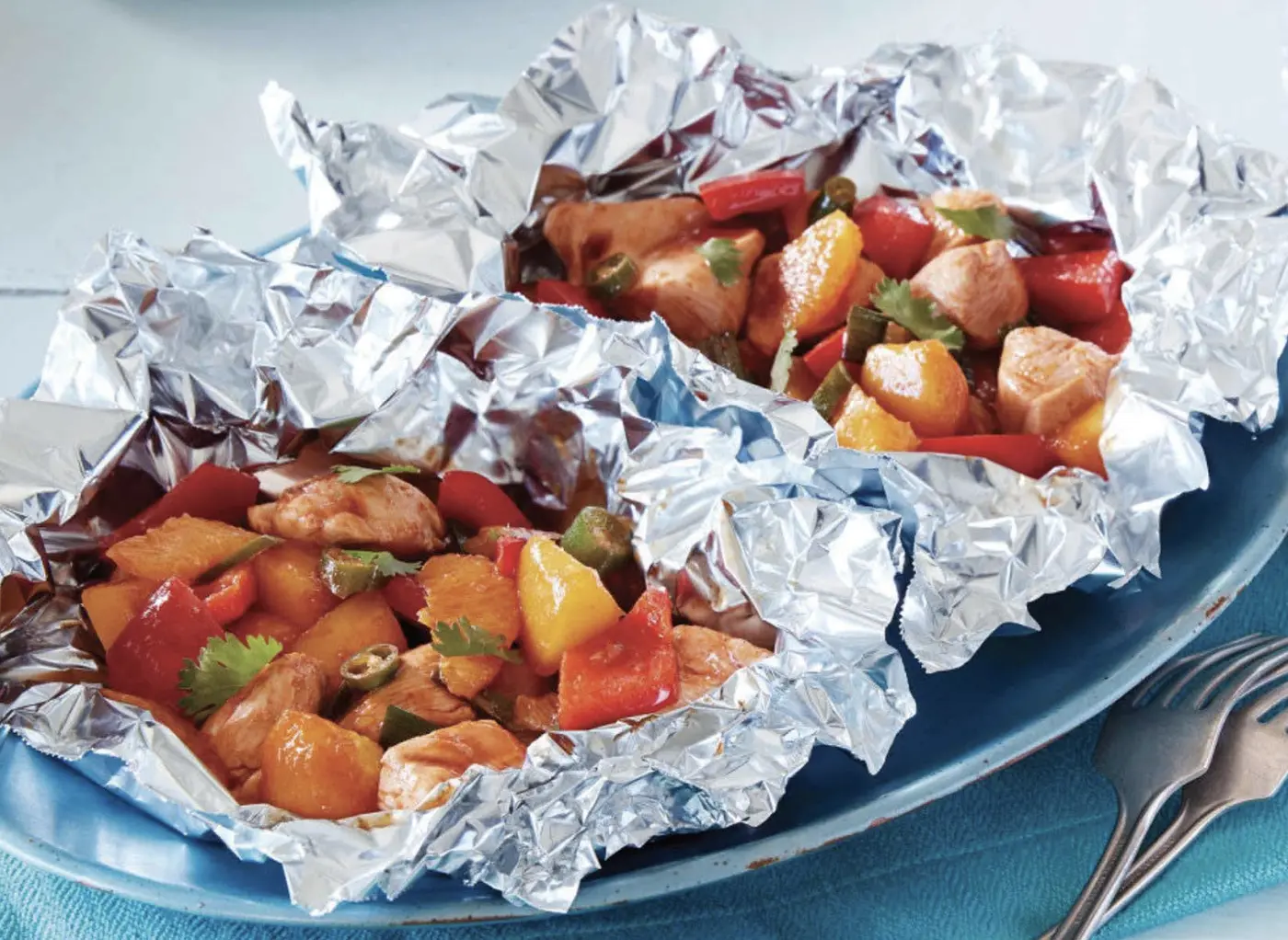
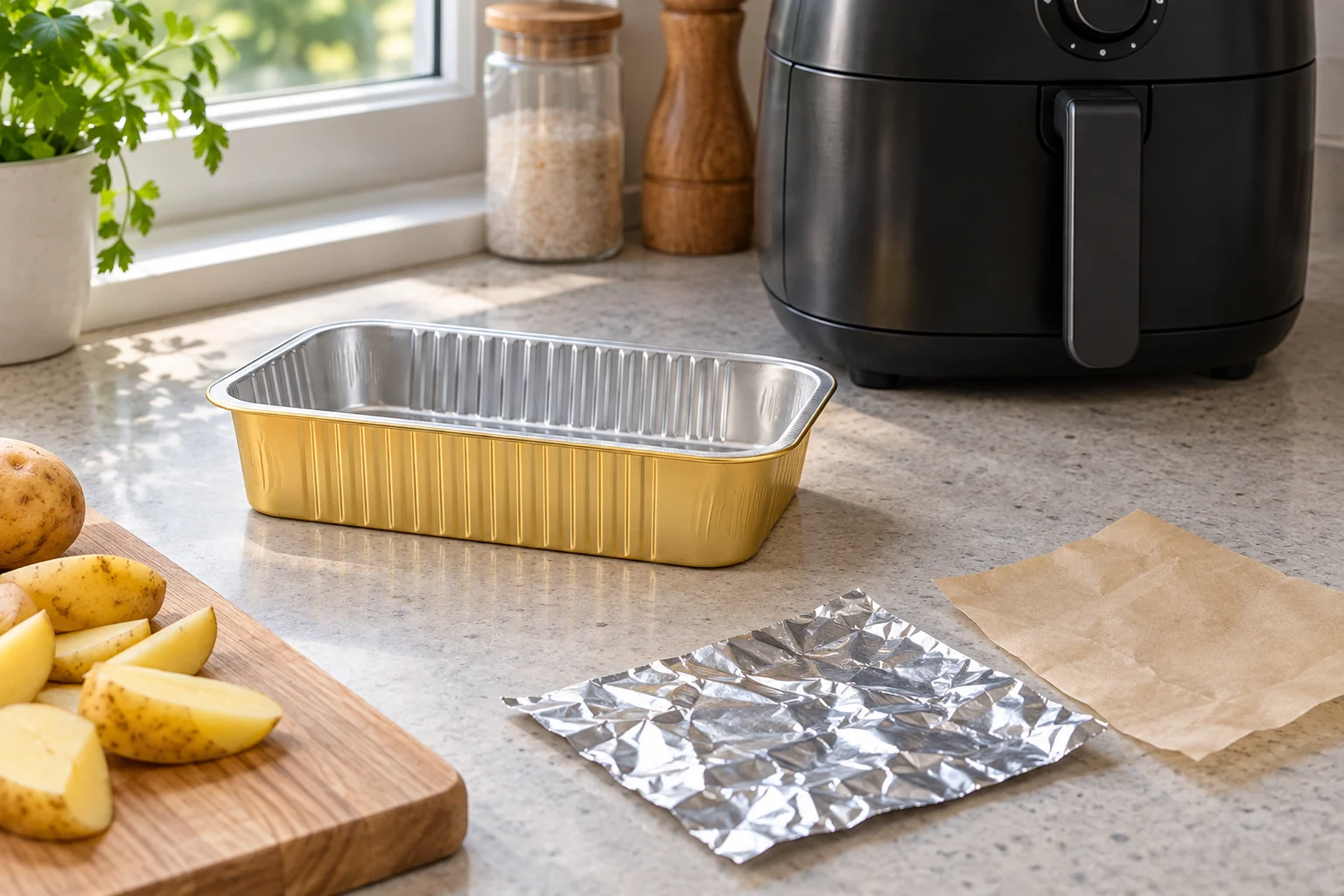
Foil, parchment or no liner? Start with the instructions for your air fryer, then decide what problem you want to solve: sticking, cleanup or handling a particular food. A liner that suits one appliance may be unsuitable in another, and an ordinary oven rating does not settle the question.
Check the appliance before choosing the material
Look up your exact model and cooking mode. Check whether liners are allowed and where they may go. Basket-style fryers and oven-style appliances should not be treated as interchangeable.
For example, Philips advises against baking paper and foil for the models covered by its support page, including HD9252/90. That advice takes priority over a liner package or an online recipe. P1
If your appliance does not provide a clear answer, use its normal cooking setup without an added liner, or ask its manufacturer before adding one. Do not assume a product labeled “air fryer liner” is approved for every air fryer.
Compare the options by the job
For food release: parchment can be useful when sticking is the problem, provided the appliance and paper instructions permit it. Reynolds says its parchment generally releases food more easily than its standard foil. Standard foil and a product specifically sold as non-stick foil are different choices; appearance alone does not identify a non-stick surface. R3
For cleanup: either material may reduce contact between food and a permitted cooking surface. But cleanup convenience is not a reason to cover areas the appliance needs left open. A sheet cannot replace a required basket, rack or drip tray.
For acidic or salty dishes: check the food-contact directions for the actual foil. Reynolds notes that highly acidic or salty foods can cause pinholes or discoloration in its foil. Do not assume an unspecified coating resolves this. Choose another permitted cooking surface if the product’s suitability is unclear. R3
For airflow: choosing no liner avoids introducing another layer across the cooking surface. Philips identifies airflow obstruction as a reason for its advice against liners. Follow the arrangement in your own manual rather than improvising extra holes or wrapping the entire basket. P1
Read the liner package as carefully as the recipe
A useful example is Reynolds Kitchens Unbleached Parchment Air Fryer Liners. The product page specifies a 400°F limit on the air-fryer setting and excludes rectangular/toaster-oven-style air fryers. These are limits for that named product, not a temperature recommendation for all parchment. R1
Check your own package for its permitted appliance type, mode, temperature, placement and reuse instructions. If the recipe exceeds any applicable limit, choose a different permitted cooking method or suitable accessory. Lowering the temperature without adapting the cooking instructions is not a complete recipe adjustment.
Before and after cooking
Where paper liners are permitted, follow both manufacturers’ loading and preheating directions. Reynolds warns that unweighted paper can lift into the heating element and create a fire hazard. Do not run a loose paper liner through preheating. R2
Before starting, confirm that the liner stays in its permitted position and that the prescribed airflow paths remain clear. If you cannot meet those conditions, leave it out. Do not use a liner to conceal damage or avoid the appliance’s cleaning instructions.
After cooking, follow the appliance’s handling and cleaning directions and the liner maker’s disposal or reuse instructions. The Reynolds air-fryer liners described above are single-use; a reuse claim for another parchment product does not apply to them. R1
A simple choice for the next meal
If your manual rejects liners, cook without one. If it allows them, choose a product approved for that setup and the actual food, then follow its limits. Choose by the appliance and product instructions, rather than assuming one material is always better. This guide does not establish air-fryer suitability for any unidentified FIRSTALU foil. The useful choice is the one that fits your appliance and solves a real cooking problem.

