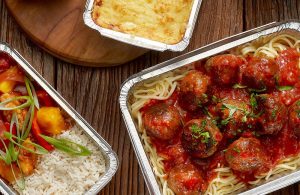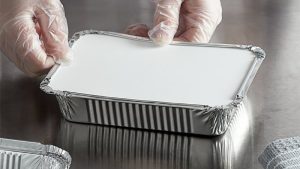
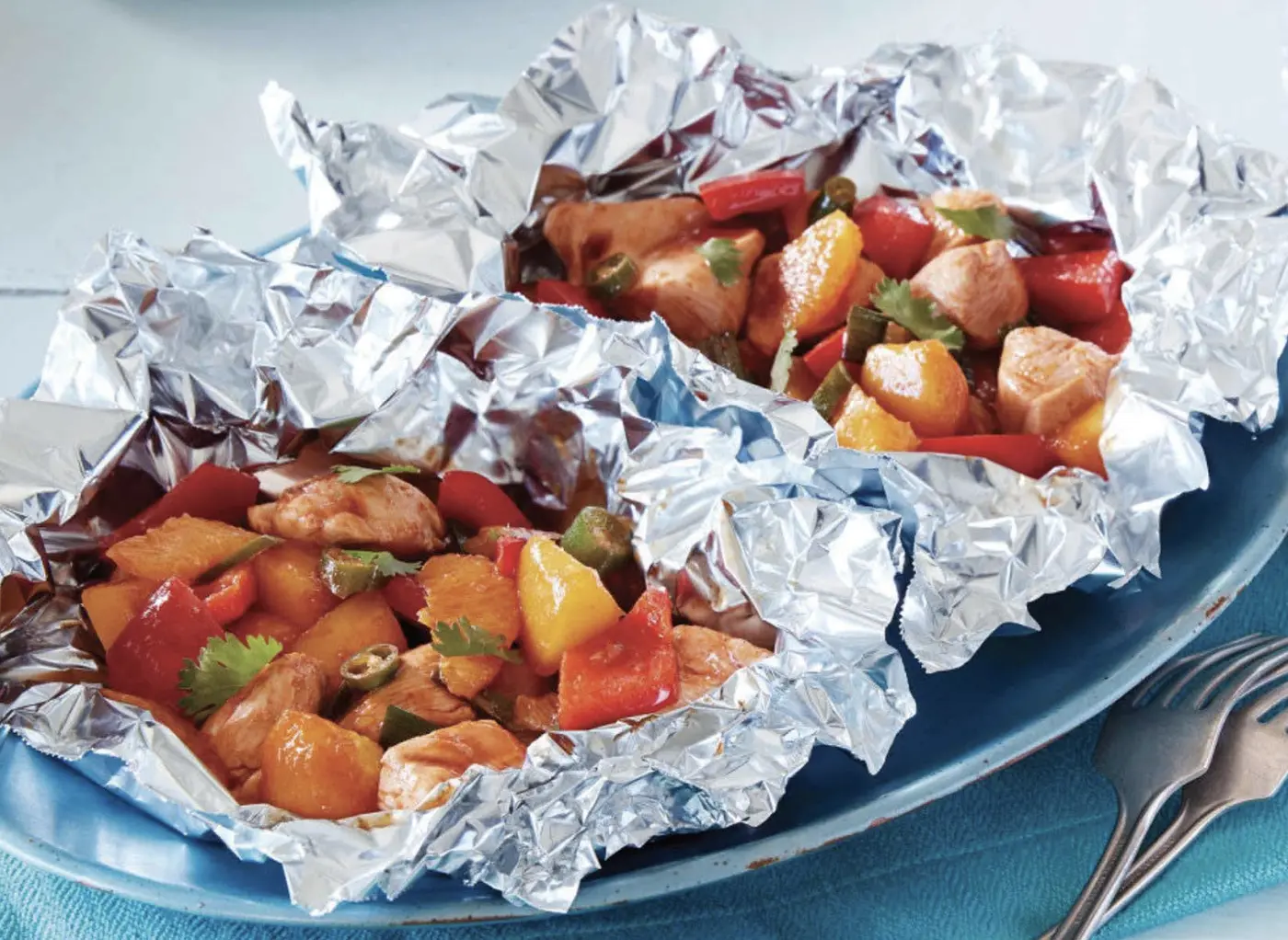
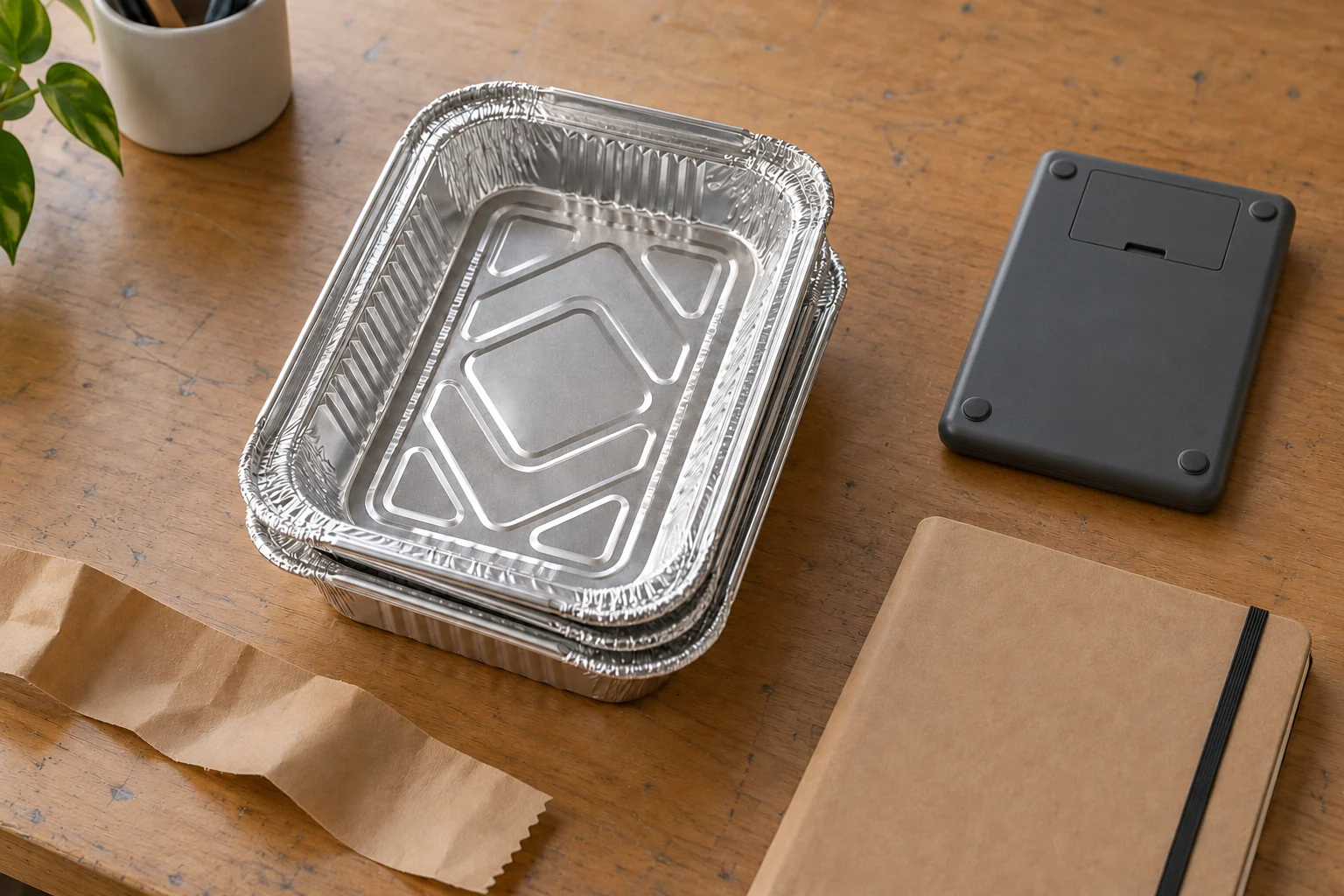
The price of an empty tray is only one input to a packaging decision. Compare the cost of getting a meal to its destination in acceptable condition. A foil pack may be economical for one menu and unsuitable for another; the calculation should allow either result.
Define what you are measuring
For one fixed delivery cohort, add packaging issued, packing labor, packaging-related failure losses and allocated storage cost. Divide by the number of successfully delivered meals in that cohort. Define success before the trial, for example: correct closure, no spill and presentation that meets your written standard. Food-safety requirements remain separate pass/fail conditions; they are not something to trade for a lower cost.
This is a packaging-related operating-cost measure, not the total cost of a meal. It excludes normal ingredients, routine delivery and overhead unless you deliberately add them to both options. Record the same menu, portion, route conditions and acceptance rules for both.
Worked example: invented numbers, not measured savings
The following USD figures are entirely hypothetical. A and B are unnamed tray-and-lid systems, not FIRSTALU products. Each trial starts with 1,000 meals; failed deliveries are excluded from successful output.
- A: 1,020 complete packs issued at $0.20 = $204; the 20 extra packs are wasted before dispatch. Packing takes 20 seconds per meal at $18/hour = $100. Ten failed deliveries incur $6 each in additional food-loss costs = $60. Allocated storage is $12. Total: $376; successful meals: 990; cost per success: $376 ÷ 990 = $0.380, rounded.
- B: 1,010 packs at $0.25 = $252.50; 10 packs are wasted before dispatch. Packing takes 15 seconds per meal at $18/hour = $75. Four failed deliveries incur $6 each = $24. Storage is $15. Total: $366.50; successful meals: 996; cost per success: $366.50 ÷ 996 = $0.368, rounded.
The $6 loss excludes packs and packing labor already counted. This example has no replacement deliveries. If you resend meals in a real trial, record their extra resources and define consistently whether your denominator counts original orders eventually fulfilled or individual delivery attempts.
Test the conclusion before trusting it
Here B has the higher purchase price but the lower calculated cost. Change its packing time from 15 to 20 seconds, keeping other inputs unchanged: labor becomes $100, total becomes $391.50 and cost per success becomes $0.393. The apparent advantage reverses. The example illustrates sensitivity, not a predicted saving.
Collect your own inputs
Time the entire packing batch, including opening cartons, refills, closing lids and ordinary interruptions. Divide total labor time by meals processed; do not time only the fastest operator's best attempt. Count wasted packs separately from food-filled delivery failures. Charge each item once.
Record storage as measured shelf or pallet space first. If no defensible dollar allocation exists, report space separately rather than inventing rent savings. Repeat across representative busy and quiet periods, and note changes in staff or menu.
Choose only after checking the failure log and the range of results. If costs are close, a consistent closure or easier stock management may matter more than a fraction of a cent. Keep environmental comparisons separate unless you have a suitable assessment; this arithmetic does not establish recyclability or lower environmental impact.