
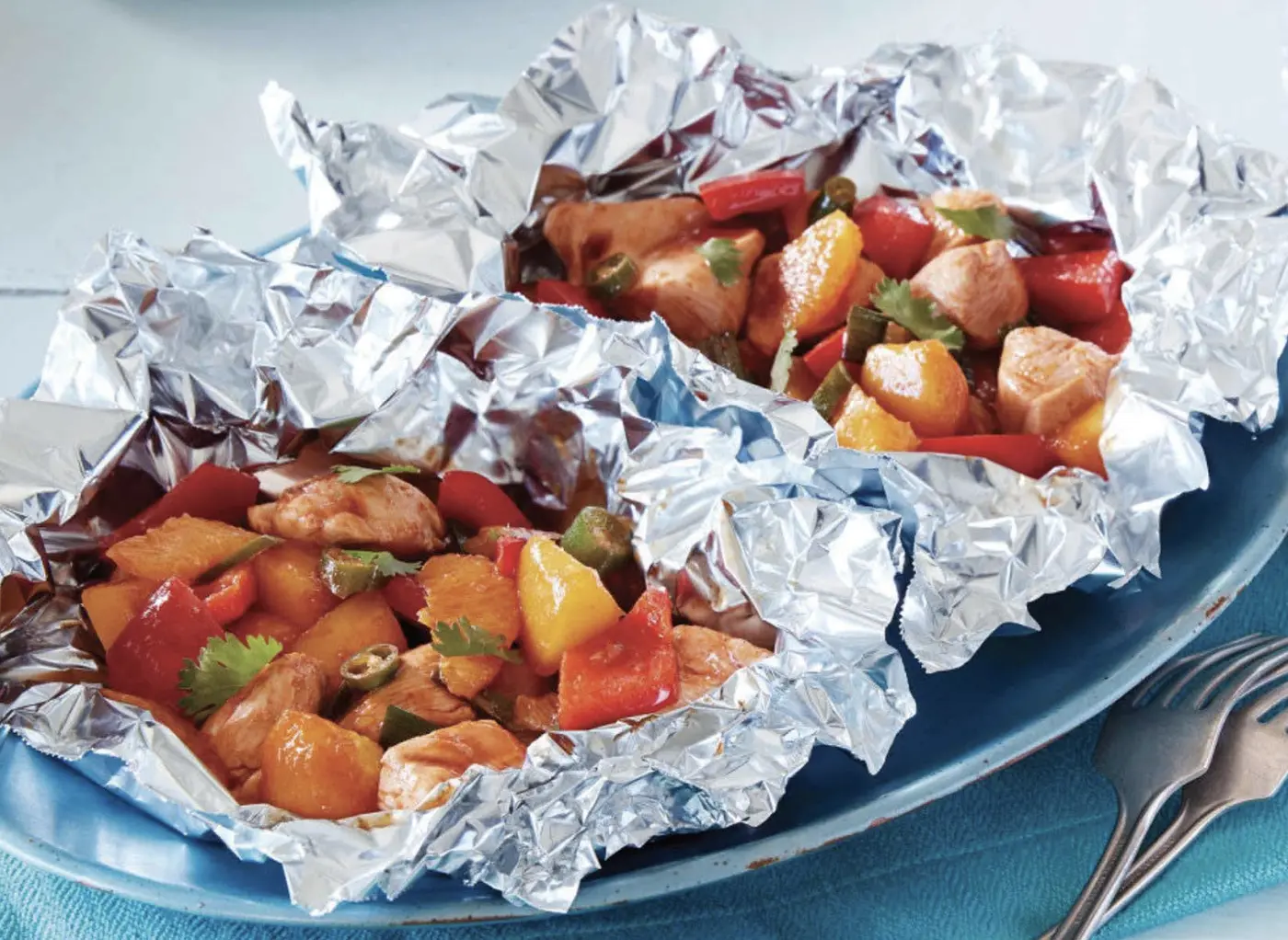
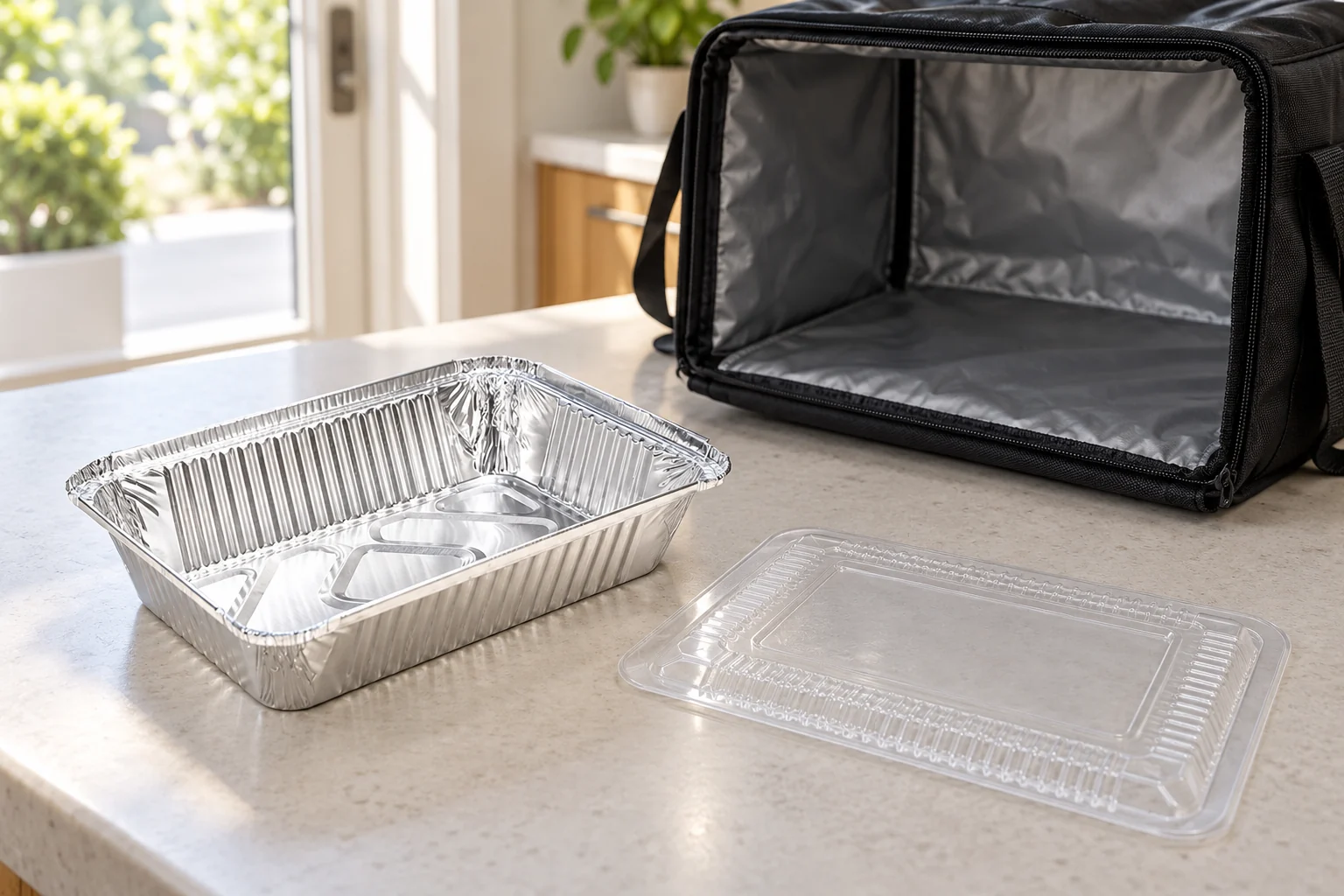
A tray that looks right on the packing bench may behave differently once it contains a full portion and travels in a delivery bag. Choosing a foil pack is therefore a question about the whole arrangement: the dish, tray, lid, handling and journey. This guide proposes a practical screening trial. It is not a food-contact test or proof that an unidentified container is suitable for every menu item.
1. Define the meal and check the components
Write down the actual dish, portion weight, sauce quantity and intended packing conditions. Include the menu items most likely to challenge the pack: a heavy portion, a dish with loose sauce, or a presentation that must remain intact. Do not substitute water for food and treat the result as proof of performance with every recipe.
Identify the exact tray and lid, including any coating, film or insert. Check their instructions for the food, contact time, storage and heating you intend. A tray's directions do not automatically cover its lid. If the documentation does not establish suitability for an acidic or salty dish, resolve that question before using the combination; a journey without visible damage cannot establish chemical suitability.
2. Set the acceptance criteria before packing
Decide what would make the pack unacceptable. Useful observations include liquid outside the closed pack, a lid that lifts, a folded or damaged rim, crushing of the food below a stacked tray, or a base that needs more support than the workflow provides. Define these as your trial criteria, rather than calling the pack “leakproof” in advance.
Record the tray and lid references, fill weight, closure method, number of packs stacked, carrier and planned journey. Photograph a correctly closed pack so staff have an example to compare with. Use the maker's closure instructions; do not add an improvised fastening and assume the resulting pack has been validated.
3. Reproduce the delivery you actually offer
Pack the real dish using the intended portion and lid. Note whether the rim is clean enough for the specified closure and whether closing the pack distorts it. Use the planned carrier, loading pattern and stacking arrangement. Run a representative delivery route, including normal collection, carrying and handover, without deliberately creating unsafe driving or handling conditions.
Record elapsed time and observations at dispatch and arrival. At the destination, check the outside of each pack and the carrier for escaped liquid, inspect the rim and lid, and open the meal to assess movement, compression and presentation. If texture matters, record the result rather than inferring it from an intact lid. Repeat with relevant menu items and different staff; one successful journey is only one observation.
4. Manage food temperature as a separate control
An intact foil container does not demonstrate that food stayed at an appropriate temperature. Apply the food-temperature and hygiene controls required for your operation and jurisdiction, with measurements and records specified by your food-safety procedures. Packaging observations should sit beside those records, not replace them.
For example, UK government delivery guidance covering England, Northern Ireland and Wales distinguishes secure packaging from keeping chilled food cool and using insulated carriers for food that must remain hot. It also tells businesses moving into delivery to review their food-safety procedures. This is an example of operational guidance, not a temperature rating for a foil tray. Food safety for food delivery
5. Turn failures into specific changes
If sauce escapes, investigate the fill level, closure and tray–lid match. If a lower pack deforms, review the stacking arrangement and support. Change one variable at a time where practical, then repeat the relevant trial. Do not solve a packaging problem by abandoning required food-temperature controls.
Keep a short record: pack references, dish, portion, closure, carrier, route duration, observed failures, photographs and decision. Approve only the combination and conditions you actually assessed, subject to the product instructions and your food-safety procedures. Revisit the trial when the lid, recipe, portion or delivery method changes. The useful outcome is a repeatable packing method with known limits, rather than a promise that one tray suits every delivery.
