
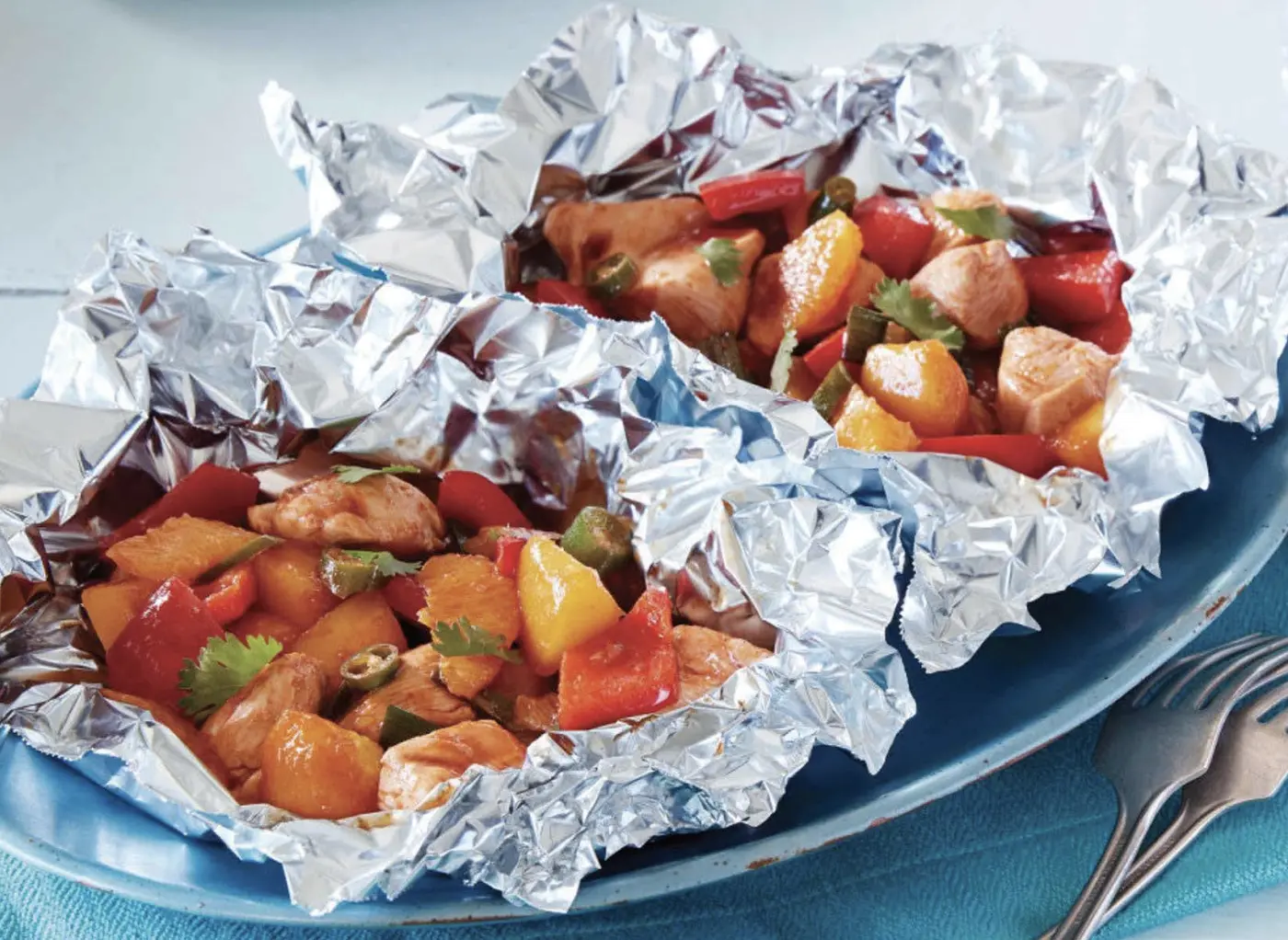
A food container looks simple until it fails in delivery.
A curry leaks into the bag. Fries arrive soft because steam had nowhere to go. A meal prep tray bends when the customer lifts it. A paper box looks good in photos but becomes weak with sauce. A buyer saves a little on the container, then loses more through complaints, refunds, and repacking work.
That is why importers and distributors should not choose food containers only by size and unit price. The better starting point is the food, the service channel, and the handling route. A container used for short-distance takeaway is not the same as a container used for chilled meal prep, supermarket ready meals, airline catering, or long-distance delivery.
Search demand also points in this direction. Broad terms such as food containers, food packaging, and meal prep containers carry much more interest than narrow factory terms. Restaurant discussions online often focus on practical problems: leaking lids, soggy fried food, foam bans, packaging cost, and whether eco-friendly containers can still handle real meals. Those are the questions buyers bring to suppliers, even when the first RFQ only says “please quote 750 ml food container.”
This guide explains what importers should check before ordering food containers for takeout, delivery, and meal prep.
Start with the food, not the catalog photo
A catalog photo can show shape, color, and lid style. It cannot show how the food behaves inside the container.
Before asking for a quote, define the food clearly. “Meal prep” is too broad. “Chilled rice and chicken meal with sauce, reheated by customer” is useful. “Hot noodle soup for takeaway delivery” is different from “dry bakery items for same-day counter sales.” “Fried chicken and fries for 25-minute delivery” is different from “roasted vegetables served at a catering event.”
The supplier needs this information because moisture, oil, acid, salt, heat, and contact time all affect packaging choice. A container that works well for dry food may not be suitable for soup. A box that looks sustainable may not hold a sauced meal well. A lid that fits for cold display may not be the best choice for hot steam.
A good RFQ should include:
- food type and portion weight
- sauce, oil, moisture, acid, and salt level
- hot fill, chilled, frozen, oven, or microwave use
- expected delivery or storage time
- whether the customer eats directly from the container
- whether the product needs retail shelf presentation
- lid type, printing needs, and packing quantity
These details help the supplier recommend the right material and structure instead of guessing.
Why delivery makes packaging harder
Delivery is less forgiving than counter service. A takeaway meal may sit in a bag, on a scooter, inside a car, or on a doorstep before the customer opens it. During that time, the package faces movement, steam, condensation, pressure from other items, and temperature change.
This is why restaurant owners often talk about leaking and soggy food when discussing takeout containers. The problem is not always the food recipe. Sometimes the package traps too much steam. Sometimes the lid does not fit tightly enough. Sometimes the container is too shallow, too weak, or too large for the portion. Sometimes hot and cold items are packed together.
For delivery packaging, buyers should check four things:
1. Can the container hold the food without bending? 2. Does the lid match the heat and moisture condition? 3. Is there enough depth and rim control for movement? 4. Will the food still look acceptable after transport?
If the food is fried or crispy, full sealing may keep heat but hurt texture. If the food is saucy, venting may help steam but increase leak risk. There is no single “best” takeout container for every menu. The packaging has to match the dish.
Match material to the use case
Importers often ask for one material first: aluminum foil, kraft paper, sugarcane bagasse, PP plastic, PET, or paper cups. That is normal, but material should follow the use case.
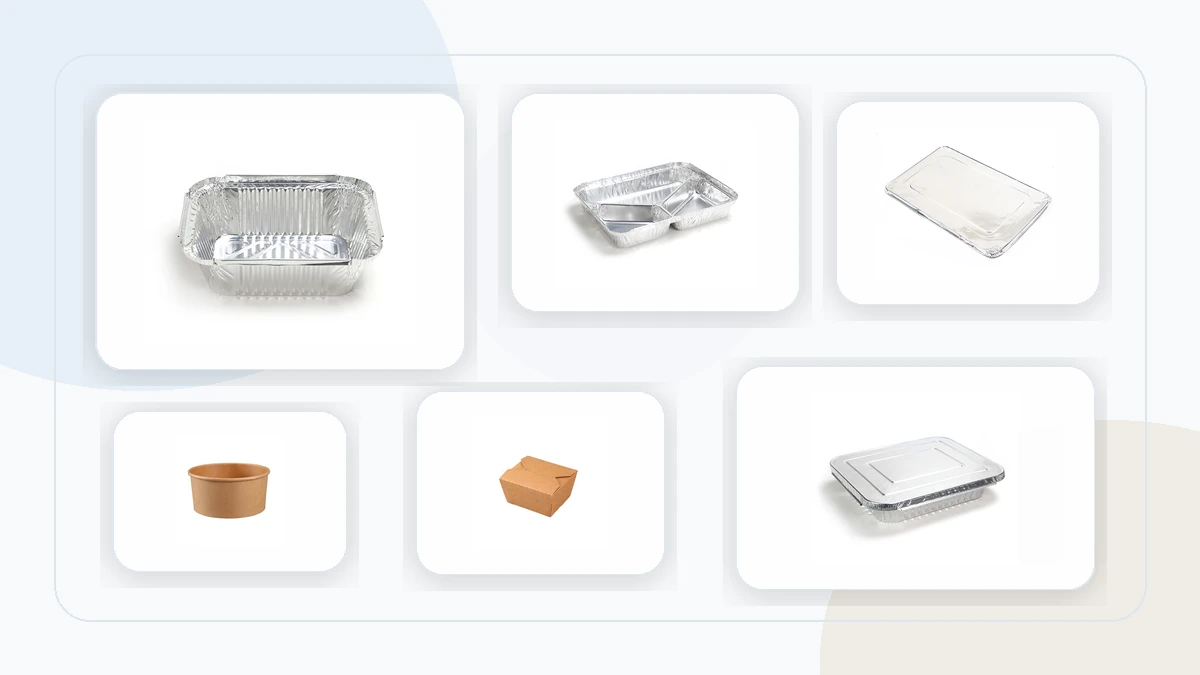
Aluminum foil containers are common for hot meals, baking, catering, airline meals, and ready-meal formats. They handle heat well in many food service applications and can be matched with board or paper lids. They are useful when oven heating, heat retention, or meal tray structure matters. For FirstAlu options, see [aluminum foil containers](/products/aluminum-foil/container).
Kraft packaging works well for bakery, dry food, light meals, snack boxes, and some takeaway formats where paper presentation matters. It can support a natural look and private-label design, but buyers should test it with oily or wet foods before assuming it will hold every dish. See [kraft packaging](/products/kraft-packaging).
Sugarcane tableware is often considered when buyers want a molded fiber option for takeaway meals or food service. It can be useful for many dry or moderate-moisture foods, but buyers still need to test hot, oily, sauced, or long-hold meals. See [sugarcane tableware](/products/sugarcane-tableware).
Paper cups are not only for drinks. They may be used for soup, ice cream, sides, sauces, and takeaway beverage programs depending on structure and lining. The buyer should confirm hot/cold use, lid fit, printing, and packing. See [paper cups](/products/paper-cups).
The main point: material names are not enough. The supplier needs the food and handling details.
Lid fit can decide whether the order succeeds
Many food container problems are lid problems.
A tray may be strong enough, but the lid may pop during delivery. A lid may close well when empty, but loosen when steam builds. A paper lid may look clean but need correct board structure and rim fit. A plastic lid may show the food clearly but may not suit high heat. A film-sealed pack may work for some ready meals but needs the right tray, machinery, and sealing condition.
For aluminum foil containers, buyers often discuss board lids, paper lids, plastic lids, and sometimes film sealing depending on the application. Paper lids can be printed, which is useful for private-label programs, product names, heating instructions, and brand presentation.
Before ordering, confirm:
- exact lid type for the selected container
- whether the lid is for hot food, cold food, or room-temperature use
- stacking behavior after filling
- whether the lid needs venting
- whether printed paper lids are required
- whether the lid affects carton quantity and shipping volume
- whether the supplier can send tray and lid samples together
Do not approve a tray sample without testing the final lid.
Heat and reheating claims need careful wording
Food container buyers often ask whether a product is oven-safe, microwave-safe, freezer-safe, or suitable for air fryers. These are useful questions, but they should be answered for the exact product and use condition.
Aluminum foil containers are commonly used for oven heating in many applications, but they are not automatically suitable for every heating method, every lid, or every appliance instruction. Paper lids, plastic lids, and printed components may have different limits from the tray itself. Microwave use also depends on local appliance guidance, container design, and user instructions; buyers should not make broad claims without checking.
For meal prep and ready-meal programs, importers should ask:
- Will the food be chilled or frozen?
- Will the customer reheat in an oven, microwave, air fryer, or steamer?
- Is the lid removed before heating?
- Are heating instructions printed on the lid or label?
- Has the final pack been tested with the real food?
This protects the buyer from a common mistake: choosing a container based on one heat claim while ignoring the lid or final use.
“Eco-friendly” still has to work with real food
Many markets are moving away from foam and single-use plastic formats. Restaurant owners and distributors also feel pressure from customers who want better-looking or more sustainable packaging. That creates demand for kraft, paper, molded fiber, aluminum, and other alternatives.
But eco-friendly wording does not solve the operational problem by itself. If the container leaks, collapses, or makes food soggy, the customer will not accept it. If the pack costs more but does not match the menu, the restaurant may switch back or look for another supplier.
Importers should ask suppliers for practical use guidance instead of relying on slogans. For example:
- Is this container better for dry food, sauced food, or fried food?
- Does it need a separate liner or inner bag?
- How long can hot food stay inside before texture changes?
- Does the lid trap steam?
- What is the carton packing and storage condition?
- What documents are available for the target market?
Sustainability claims should also be market-specific and document-based. Do not assume one word such as recyclable, compostable, biodegradable, or plastic-free has the same meaning in every country or customer program.
Carton packing and shipping volume affect the real cost
A container with a low unit price may not be the lowest-cost option after shipping.
Importers should compare carton quantity, carton dimensions, pallet loading, container loading, and damage risk. Some containers nest tightly. Some lid combinations take more space. Some premium shapes look good but reduce carton efficiency. A stronger container may cost more per piece but reduce deformation and complaints.
For wholesale food containers, ask for:
- pieces per sleeve or bag
- pieces per carton
- carton size and gross weight
- pallet loading if needed
- container loading estimate for bulk orders
- sample carton or packing photos
- whether tray and lid ship together or separately
This matters especially for distributors selling mixed SKUs. Warehouse space, picking speed, and carton strength affect the buyer's real margin.
What to ask before ordering takeout containers wholesale
When buyers search for takeout containers wholesale, they often want a fast quote. A fast quote is possible only if the RFQ is clear.
A better RFQ includes:
1. Product type: foil tray, kraft box, sugarcane clamshell, paper cup, or another format 2. Food application: rice meal, pasta, soup, fried food, bakery, salad, sauce, dessert, etc. 3. Portion size: target volume, weight, or current container size 4. Use condition: hot fill, delivery, chilled meal prep, frozen, oven, microwave, or counter service 5. Lid requirement: board lid, paper lid, plastic lid, film seal, vented lid, or printed lid 6. Market: country or region where the package will be sold 7. Quantity: trial order, regular monthly order, or annual forecast 8. Branding: plain pack, printed lid, private-label carton, barcode, or retail pack 9. Documents: product spec, material declaration, food-contact documents, factory certificates 10. Logistics: carton packing, pallet requirements, destination port, or delivery term
This information lets the supplier compare the right options. Without it, the quote may be based on assumptions.
How to choose for different channels
Different sales channels need different priorities.
For restaurant takeaway, focus on lid fit, leak resistance, heat handling, stackability, and cost. The container should survive delivery and keep the food acceptable until the customer opens it.
For meal prep brands, focus on portion control, reheating instructions, chilled or frozen storage, shelf presentation, and repeatable packing. A small mismatch in lid fit or tray depth can become a daily production problem.
For catering and events, focus on tray strength, serving appearance, heat retention, and bulk packing. Larger trays need better wall strength and easier handling.
For supermarket ready meals, focus on appearance, labeling, shelf life requirements, sealing or lid structure, and customer instructions. Documentation and sample testing are more important here.
For airline catering, focus on stable dimensions, consistent lid fit, packing efficiency, and meal service workflow. Even small dimensional variation can create trouble when trays need to fit carts, inserts, or standardized meal setups.
A supplier should help the buyer narrow the choice based on channel, not just send the largest catalog.
Sample testing should copy the real situation
A sample test is only useful if it copies the final use.
Do not test an empty container and assume the result applies to a hot sauced meal. Do not test a tray without the lid. Do not test room-temperature food if the final product will be chilled and reheated. Do not test one carton if the final order will be stacked high in a warehouse.
For a practical sample test, prepare:
- the real food or the closest possible substitute
- the expected filling weight
- the final lid or closure method
- the planned heating or cooling process
- the expected delivery time
- stacking pressure similar to real handling
- photos after filling, transport, and opening
Then record what happens: leakage, lid looseness, condensation, soggy texture, deformation, color transfer, customer appearance, and handling comfort.
A simple importer checklist
Before confirming a food container order, check these points:
- Food type and portion weight are clear
- Sauce, oil, moisture, acid, and salt level are described
- Use condition is confirmed: hot, chilled, frozen, oven, microwave, delivery, or immediate service
- Material is matched to the food, not chosen only by trend
- Lid type is selected and tested with the container
- Venting or steam control is considered for fried or hot food
- Printed lid or private-label requirements are confirmed early
- Carton packing and shipping volume are included in cost comparison
- Required documents are listed by target market or customer
- Samples are tested with real food and real handling time
This checklist is more useful than asking for “best food containers” in general. There is no best container for every menu. There is only the container that fits the food, channel, and buyer's cost target.
How FirstAlu can help
FirstAlu supplies disposable food packaging for B2B buyers, including aluminum foil containers, foil container lids, kraft packaging, paper cups, and sugarcane tableware. Buyers can discuss takeaway, catering, airline meal, bakery, meal prep, and ready-meal packaging needs.
Tell us your food type, target market, packaging format, lid requirement, and order quantity. We can help compare suitable food container options, check packing details, and prepare samples for your purchasing plan.
Useful pages:
- [Aluminum foil containers](/products/aluminum-foil/container)
- [Foil container lids](/products/foil-container-lids)
- [Kraft packaging](/products/kraft-packaging)
- [Sugarcane tableware](/products/sugarcane-tableware)
- [Paper cups](/products/paper-cups)
- [Quality certifications](/quality-certifications)
- [Contact FirstAlu](/contact)
FAQ
What is the best food container for takeout delivery?
There is no single best container for every takeaway meal. Hot rice meals, fried food, soup, pasta, bakery items, and cold salads all need different packaging choices. Start with food type, temperature, delivery time, lid fit, and leak risk.
Are aluminum foil containers good for meal prep?
They can be a good option for many meal prep and ready-meal uses, especially where heat handling, tray structure, and lid matching matter. The buyer should confirm the exact tray, lid, food type, storage condition, and reheating instructions before ordering.
Why do takeout foods become soggy in containers?
Sogginess often comes from trapped steam and condensation. It can also come from packing fried food too tightly, using the wrong lid, or mixing hot and cold items. The solution may involve venting, different container depth, different lid choice, or changing the packing process.
Are compostable food containers always better?
Not automatically. Compostable or molded fiber containers can be useful for many food service programs, but buyers still need to check moisture resistance, oil resistance, heat condition, lid fit, local disposal rules, and available documents. The package still has to work with the real food.
What should I ask before buying takeout containers wholesale?
Ask about material, size, volume, lid fit, food application, heat or cold use, carton packing, MOQ, lead time, documents, and sample testing. If the container is for delivery, also ask about leak risk, stacking, and steam control.
Can paper lids be printed for food containers?
Yes, paper lids can be printed when the lid structure and project requirements support it. For private-label food packaging, confirm artwork, MOQ, sample approval, carton packing, and whether the printed lid matches the selected container.