
Why the first range matters
When a distributor adds aluminum foil containers, it is easy to start with too many sizes. A large catalogue looks complete, but it can create slow-moving stock, mixed carton quantities, and confused sales teams.
A better first range is usually smaller and more focused. It should cover the main foodservice uses in the buyer’s market, match the lid types customers already ask for, and be simple enough for restaurants, caterers, bakeries, and meal-prep operators to reorder.
This guide is written for importers, wholesalers, and foodservice distributors who want to add or refresh an aluminum foil container line without carrying unnecessary SKUs from the beginning.
Start from food use, not from the catalogue
Before choosing tray codes, start with the food service channel.
A takeaway shop, a catering company, a bakery, and a supermarket deli do not use containers in the same way. They care about different things:
- portion size
- food weight
- sauce level
- lid fit
- stacking during delivery
- oven or reheat use
- shelf presentation
- carton handling in the warehouse
This is why a first order should not simply copy every available size. The distributor should group the range by use case, then choose the tray sizes that serve those use cases best.
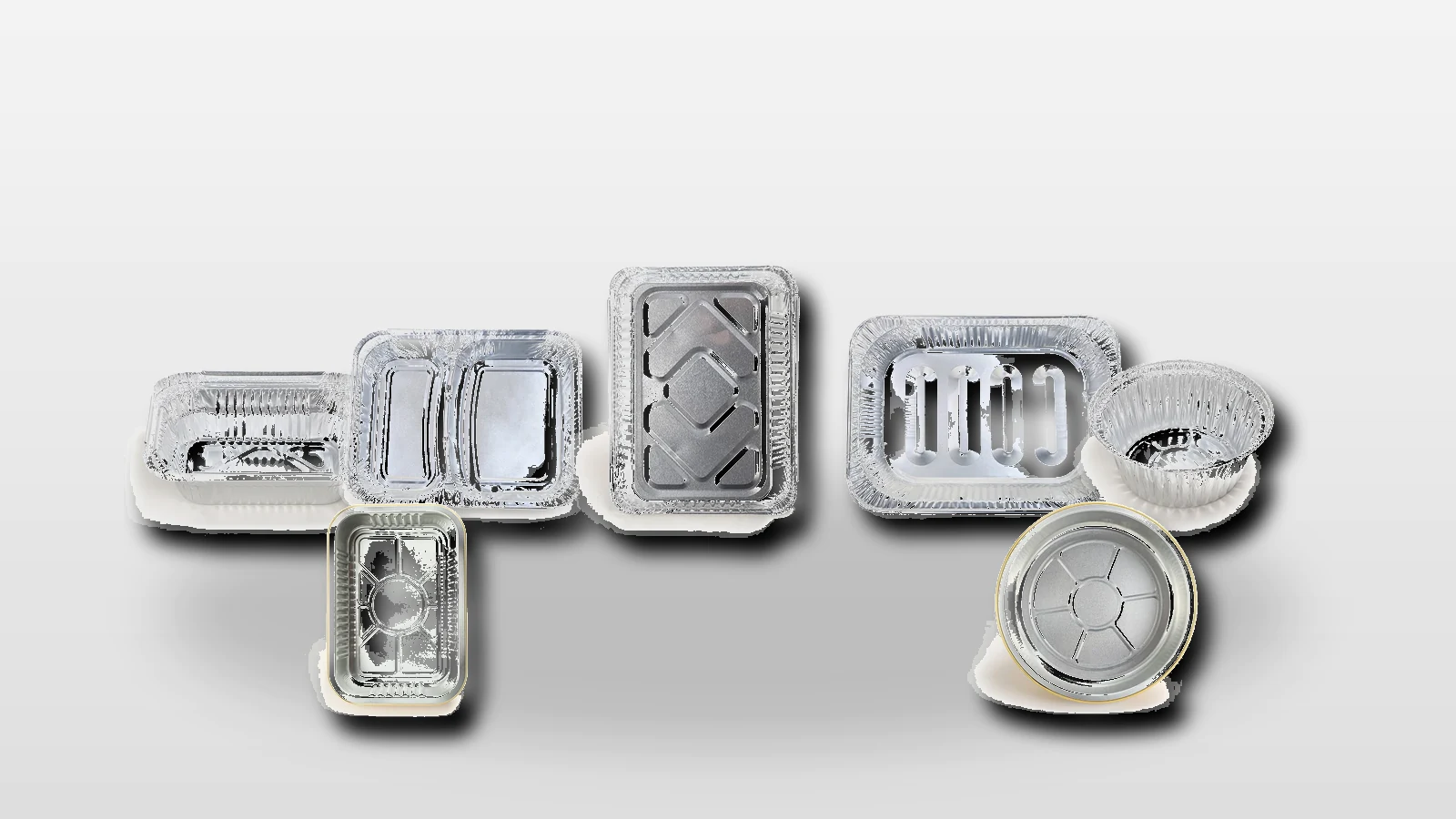
For most markets, the first range can be built around five groups.
1. Single-portion takeaway containers
Single-portion containers are usually the fastest-moving part of the range. They are used by restaurants, dark kitchens, canteens, school meal suppliers, and small food shops.
For this group, distributors should look for practical sizes that fit rice dishes, pasta, grilled food, curry, roasted vegetables, and mixed meals. The container should be deep enough for a normal portion but not so large that the food looks small inside it.
Important checks:
- Does the tray hold a normal local meal portion?
- Is it stable enough for delivery stacking?
- Does the matching lid close firmly?
- Is the rim style suitable for the customer’s packing speed?
- Does the carton quantity fit normal warehouse and van delivery handling?
A focused single-portion group helps sales teams sell quickly because the customer can understand the use immediately: lunch box, takeaway meal, delivery meal, or ready meal.
Related category: [aluminum foil containers](/products/foil-containers).
2. Family-size and catering trays
Family-size and catering trays serve a different buyer. These are used for party food, hotel catering, buffet preparation, restaurant pre-orders, and central kitchen supply.
The key issue is not only capacity. The tray must be strong enough when filled with heavy food, especially saucy dishes, roasted meat, pasta, rice, or prepared vegetables. A tray that looks fine when empty may feel weak when carried full.
For this group, distributors should check:
- tray depth and base stability
- wall strength for heavier food
- lid choice for transport
- whether the customer needs oven heating
- carton size and pallet efficiency
- whether repeat buyers need the same size every season
Catering trays are useful for distributors because they create repeat orders from foodservice customers who plan menus in advance. But they should be chosen carefully, because large trays take more warehouse space and may move slower than common takeaway sizes.
3. Bakery and oven-ready trays
Bakeries and prepared-food producers often need trays for baking, reheating, and direct presentation. These customers care about shape, rim finish, oven use, and how the product looks on the shelf or in a display case.
For a first range, distributors can consider a few oven-ready shapes that cover common bakery and deli uses, such as pies, cakes, roasted food, and ready-to-heat meals.
Useful questions:
- Will the food be baked in the tray or only packed after cooking?
- Does the customer need a lid after baking?
- Is the tray shape familiar to local bakery customers?
- Does the product need retail shelf presentation?
- Is the tray plain aluminum, lacquered, or another finish?
If food is acidic, salty, heavily seasoned, or stored for longer periods, the distributor should not assume that a plain foil tray is always the right option. Ask the supplier whether a lacquered tray or another structure is more suitable for the application.
4. Premium or smoothwall presentation items
Some buyers want a cleaner presentation than a standard wrinklewall container. Smoothwall containers can be useful for airline meals, premium ready meals, supermarket prepared food, and customers who care about shelf appearance.
Smoothwall items can help a distributor move into higher-value foodservice or retail channels. They may also require tighter matching with lids, sealing film, or filling equipment, depending on the application.
For a first range, do not add too many premium items unless there is a clear customer base. Start with a small number of practical shapes and confirm:
- whether the buyer needs manual lidding or machine sealing
- whether the container will be used for chilled, frozen, or hot food
- whether presentation is more important than low unit cost
- whether the customer needs printed sleeves, paper lids, or private-label packing
Premium items can be profitable, but they should be introduced with sample testing and real customer feedback.
5. Matching lids and closing methods
A foil container range is incomplete if the lid plan is weak. Many complaints in the market are not about the tray itself; they are about lid fit, condensation, leakage during transport, or confusion between similar sizes.
Common lid choices include:
- paper lids for many takeaway and catering applications
- clear plastic lids where food visibility matters
- foil lids for heat retention and certain foodservice uses
- sealing film for production lines or ready-meal packing
Paper lids can also support printing, which may help distributors serving private-label or branded foodservice accounts.
Before stocking a tray, check the lid plan at the same time:
- Which lid types are available for this tray?
- Are lids packed separately or together with trays?
- Can the warehouse and sales team easily match tray and lid codes?
- Does the buyer need printing?
- Does the final customer need visibility, heat retention, or sealing?
Related category: [foil container lids](/products/foil-container-lids).
Keep the first range simple enough to sell
A useful first range is not just technically correct. It must also be easy for the distributor’s sales team to explain.
A practical starting structure might look like this:
- a few single-portion takeaway sizes
- one or two deeper meal or delivery sizes
- one or two family or catering trays
- selected bakery or oven-ready shapes if the local market needs them
- matching lids for each core tray
- one premium or smoothwall option only if there is clear demand
The exact tray codes depend on the market. A distributor selling to kebab shops, Asian takeaway restaurants, bakeries, supermarkets, and institutional caterers may need different starting items.
The important point is to avoid a first order where every size looks similar and no one knows which item should be promoted first.
Packing and warehouse details can decide the real cost
Distributors often compare unit price first. Unit price matters, but it is not the only cost.
A container range also affects storage, picking, delivery, and cash flow. Two trays with similar unit prices may create different warehouse costs if carton size, pallet loading, or lid pairing is inefficient.
Ask the supplier for:
- tray dimensions and capacity
- carton quantity
- carton size and gross weight
- pallet loading suggestion
- lid matching list
- sample availability
- MOQ by size or by mixed order
- lead time for standard and custom items
- private-label or printed lid options, if needed
Do not overbuild the first order. A smaller trial range with clear repeat logic is often safer than a wide order that ties up cash in slow-moving sizes.
Samples should test real food, not only appearance
Samples are useful, but they should be tested with real food and real handling conditions.
A distributor can send samples to selected customers and ask simple questions:
- Does the size fit your normal portion?
- Does the lid close well during busy service?
- Can staff stack it safely for delivery?
- Does it hold the food weight?
- Does the tray suit oven, reheating, chilled, or frozen use as required?
- Would you reorder this size?
This kind of feedback is more useful than choosing sizes only from a PDF catalogue. It helps the distributor decide which items should become core stock and which items should stay as project-based or made-to-order items.
When to consider custom or private-label options
For the first range, standard sizes are usually the safest place to start. Custom moulds, printed lids, private-label cartons, or special packing can be added later when demand is clearer.
Custom work makes sense when:
- the buyer already has repeat volume
- a local food brand needs its own packing presentation
- the distributor wants a controlled range that competitors cannot copy easily
- the final customer needs a specific tray, lid, or packing format
If the first order is still a market test, keep customization limited. Use samples and small repeat orders to identify the items that deserve more investment.
Questions to send before requesting a quote
A distributor can get a better recommendation by sending the supplier a short product brief instead of only asking for a price list.
Useful details include:
- target market and sales channel
- main customers: restaurants, catering, bakeries, supermarkets, meal prep, or wholesalers
- food types and portion sizes
- required lid types
- standard or lacquered tray preference, if known
- expected first order volume
- preferred carton or pallet constraints
- whether printed paper lids or private-label packing may be needed later
With this information, the supplier can suggest a tighter first range and avoid quoting many irrelevant sizes.
FAQ
Should a distributor start with many aluminum foil container sizes?
Usually no. A focused first range is easier to sell and easier to manage. Start with the most common foodservice uses, then expand after real customer feedback.
Are takeaway trays and catering trays the same buying decision?
No. Takeaway trays usually focus on portion fit, lid closure, and delivery stacking. Catering trays must also handle heavier food, larger portions, and transport to events or central kitchens.
Should lids be chosen after the tray order?
No. Lids should be checked at the same time as trays. Lid fit, lid material, packing method, and code matching can affect the customer’s repeat order.
When should a distributor choose lacquered aluminum foil containers?
Lacquered trays may be considered for acidic, salty, saucy, or heavily seasoned foods, depending on the food and storage conditions. The safest step is to confirm the application with the supplier before ordering.
Can paper lids be printed?
Yes. Paper lids can be printed, which can help foodservice distributors support branded takeaway or private-label projects.
Next step
If you are building a first aluminum foil container range, send First Alu your target market, main foodservice customers, food types, preferred lid options, and expected first order quantity.
We can help review the application and suggest a practical starting range from [foil containers](/products/foil-containers), [foil container lids](/products/foil-container-lids), and related disposable food packaging items.
Contact: [Request a B2B quote](/contact).