
Restaurants do not change takeout packaging for one small reason. The unit price matters, of course. But hot food creates other questions: Will the lid stay closed? Will sauce leak in the delivery bag? Can the customer reheat the meal safely? Will the food still look good when it arrives?
That is why buying “takeout containers” is not only a packaging purchase. For restaurants, food trucks, catering kitchens and foodservice distributors, it is part of the meal experience.
This guide looks at the main points buyers should check before ordering takeout containers for hot food: material, lid type, reheating use, leakage risk, sample testing and total packaging cost.
Buyers comparing options can also review [aluminum foil containers](/products/aluminum-foil/container), [smoothwall aluminum foil containers](/products/aluminum-foil/aluminum-foil-container-smoothwall), [wrinklewall aluminum foil containers](/products/aluminum-foil/aluminum-foil-container-wrinklewall), and [product packaging lids](/products/product-packaging-lid).
Start with the menu, not only the price
A low container price can look attractive at quote stage. But if the box is too weak, the lid does not fit well, or sauce leaks during delivery, the real cost becomes higher.
Before comparing suppliers, buyers should describe the food clearly:
- Is the food hot, chilled, frozen or room temperature?
- Is it dry, oily, saucy, acidic or salty?
- Is the portion heavy or light?
- Does the meal need compartments?
- Will customers reheat it at home?
- How long is the usual delivery or holding time?
- Does the restaurant need printed lids or simple branding?
Fried food, noodles, rice meals, grilled meat, dim sum, bakery items and ready meals do not all behave the same way in packaging. A container that works well for a dry bakery item may not be right for oily rice or saucy hot meals.
Hot food puts pressure on packaging
Hot meals create steam, oil, movement and sometimes long holding time. Packaging has to deal with all of that before the customer opens the bag.
Common problems include:
- loose lids or lid deformation
- sauce or oil leakage
- softening in paper-based packaging
- condensation that affects food texture
- weak tray walls under heavy portions
- unclear customer instructions for reheating
- poor appearance after stacking or delivery
This is why buyers should test packaging with the real food. An empty sample or a water test is useful, but it does not show the full picture.
Compare material by food use
There is no single material that fits every restaurant menu. Each option has its place.
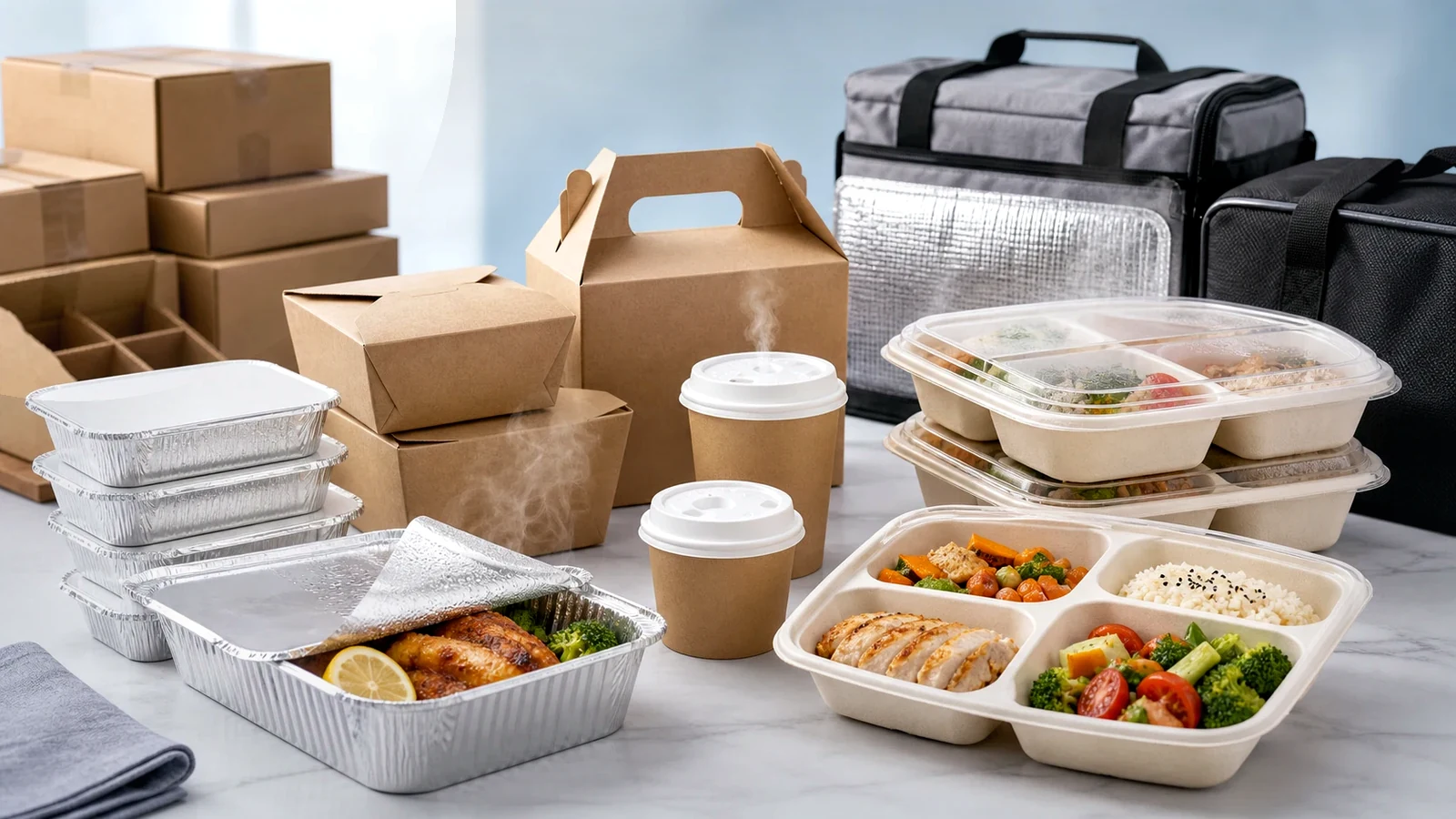
**Aluminum foil containers** are widely used for hot meals, baked food, catering, takeaway dishes and prepared meals. They offer heat resistance, shape stability and good barrier performance. They are often useful when food may be baked, kept warm or transported for delivery.
**Plastic containers** can provide visibility and tight lids for some takeaway foods. Buyers still need to check temperature limits and whether customers may try to microwave the container. Not every plastic container or plastic lid is suitable for hot food.
**Paper and kraft packaging** can work well for dry or moderately moist foods. They are also useful for branding. For oily or saucy meals, buyers should check grease resistance, lining and whether the structure stays strong during delivery.
**Sugarcane or bagasse tableware** may fit some foodservice and sustainability programs. Buyers should still check moisture resistance, heat conditions, lid fit and local disposal or composting rules before making environmental claims.
For many restaurants, the practical answer is not one material for the whole menu. It is better to match packaging by food group.
When aluminum foil containers are worth checking
Aluminum foil containers may be a good fit when the food is hot, oily, heavy, baked, grilled or sold as a ready meal.
Typical uses include:
- rice meals and hot lunch boxes
- roasted or grilled food
- bakery and oven applications
- catering trays
- airline or institutional meals
- chilled or frozen ready meals
- meals that need shape stability during transport
- food that needs better barrier protection
Buyers should still confirm the details. Foil trays differ by thickness, strength, rim design, surface treatment and lid compatibility.
For acidic, salty or strongly seasoned foods, the buyer should tell the supplier the food type before ordering. In some cases, a lacquered tray or another packaging structure may be more suitable than a plain aluminum tray.
Lid choice can decide whether the package works
A tray and lid should be selected together. A strong tray with the wrong lid can still fail in real service.
Common lid options include:
- **paper lids** for covering, branding and printed information
- **plastic lids** when food visibility is useful and the temperature condition is suitable
- **foil lids** for some heat or barrier requirements
- **sealing film** for ready meals or smoothwall trays where heat sealing is needed
Before ordering, buyers should check:
- whether the lid fits the selected tray size
- whether it stays secure during delivery
- whether it can handle steam and heat
- whether printing is needed
- whether stacking affects the lid
- whether the lid changes carton packing or shipping volume
The lid is not a small accessory. It is part of the packaging performance.
Reheating claims need careful wording
Customers often expect takeout packaging to be easy to reheat. That expectation can create problems if the packaging is not clearly specified.
Buyers should not assume that every takeout container is microwave-safe or oven-safe. The answer depends on the container material, lid material, appliance instructions and the exact product.
For aluminum foil containers, oven use may be suitable for many applications when the tray and use condition are appropriate. Microwave use is more sensitive and should follow appliance instructions, local guidance and product-specific confirmation. If microwave reheating is important in the target market, discuss it before ordering.
Also check the lid. A tray may tolerate heat, while the lid may not.
Look at total packaging cost
Restaurants and food trucks often compare container prices by piece. That is a good starting point, but bulk buyers should look wider.
Total packaging cost includes:
- tray cost
- lid cost
- printing cost if needed
- carton quantity and packing method
- shipping volume and carton CBM
- storage space
- damage or deformation rate
- leakage or complaint risk
- whether one package can cover several menu items
For importers and distributors, carton packing and loading quantity can change the real landed cost. A slightly cheaper container may not be cheaper after freight, storage and damage are included.
Test samples with real service conditions
Before a large order, sample testing should be practical and simple.
A useful test can look like this:
1. Put the actual hot meal into the container. 2. Close the lid the same way staff would during busy service. 3. Wait through the normal delivery or holding time. 4. Check leakage, condensation and food appearance. 5. Stack several filled containers if that happens in delivery bags or shelves. 6. Test the oiliest, sauciest or heaviest menu item. 7. Confirm customer instructions for reheating or disposal.
If the restaurant sells several food types, test each group separately. Rice, soup, noodles, dim sum, grilled food and bakery products may need different packaging choices.
Supplier checklist before ordering
Before asking for a final quote, buyers can prepare this information:
- food type and serving temperature
- portion weight and capacity
- tray shape and size preference
- lid type: paper, plastic, foil or sealing film
- whether the food is oily, acidic, salty or saucy
- oven, freezer, chilled storage or reheating needs
- plain or lacquered tray requirement if known
- target order quantity and repeat order plan
- packing requirements and destination market
- printing, branding or label needs
- required food-contact documents or product information
This helps the supplier recommend a workable option instead of simply quoting the lowest-priced container.
How FirstAlu can help foodservice buyers
FirstAlu supplies disposable food packaging for restaurants, foodservice distributors and import buyers, including aluminum foil containers, smoothwall trays, wrinklewall trays, foil rolls, lids and related packaging options.
For hot food takeout, we can help buyers compare tray type, lid choice, thickness, packing method and application requirements. If the food is acidic, salty or heavily seasoned, we can also discuss whether a lacquered tray or another structure should be checked.
To get a more useful recommendation, send us the food type, target capacity, lid preference, order quantity and destination market. We can help match the container to the real service condition before sample or quote stage.
FAQ
What type of container is suitable for hot takeout food?
It depends on the food. Aluminum foil containers are often used for hot meals, baked food, catering and ready meals because they handle heat and keep shape well. Paper, kraft, plastic or sugarcane packaging may also fit some applications. Buyers should match the container to the food temperature, oil level, sauce, portion weight and reheating needs.
Are aluminum foil containers good for restaurant takeout?
They can be a good option for many hot food and foodservice uses, especially where heat resistance, barrier performance and tray strength are important. Buyers still need to confirm size, thickness, lid fit, food-contact suitability and whether plain or lacquered trays are more suitable for the menu.
Can customers microwave takeout containers?
Do not assume this. Microwave suitability depends on the container material, lid material, appliance instructions and product-specific guidance. If microwave reheating is important for the market, confirm it with the supplier before ordering and provide clear customer instructions.
What lid should restaurants choose for hot food containers?
The lid depends on the tray and food. Paper lids can support branding and printed information. Plastic lids may help visibility for some takeaway use. Foil lids or sealing film may fit some prepared-meal applications. Buyers should check heat, steam, lid fit, stacking and delivery performance.
How can restaurants reduce packaging cost without choosing weak containers?
Compare total packaging cost, not only unit price. Tray strength, lid fit, packing quantity, shipping volume, storage space, damage rate and customer complaints all affect the real cost. Sample testing with real food is the safest way to avoid false savings.