
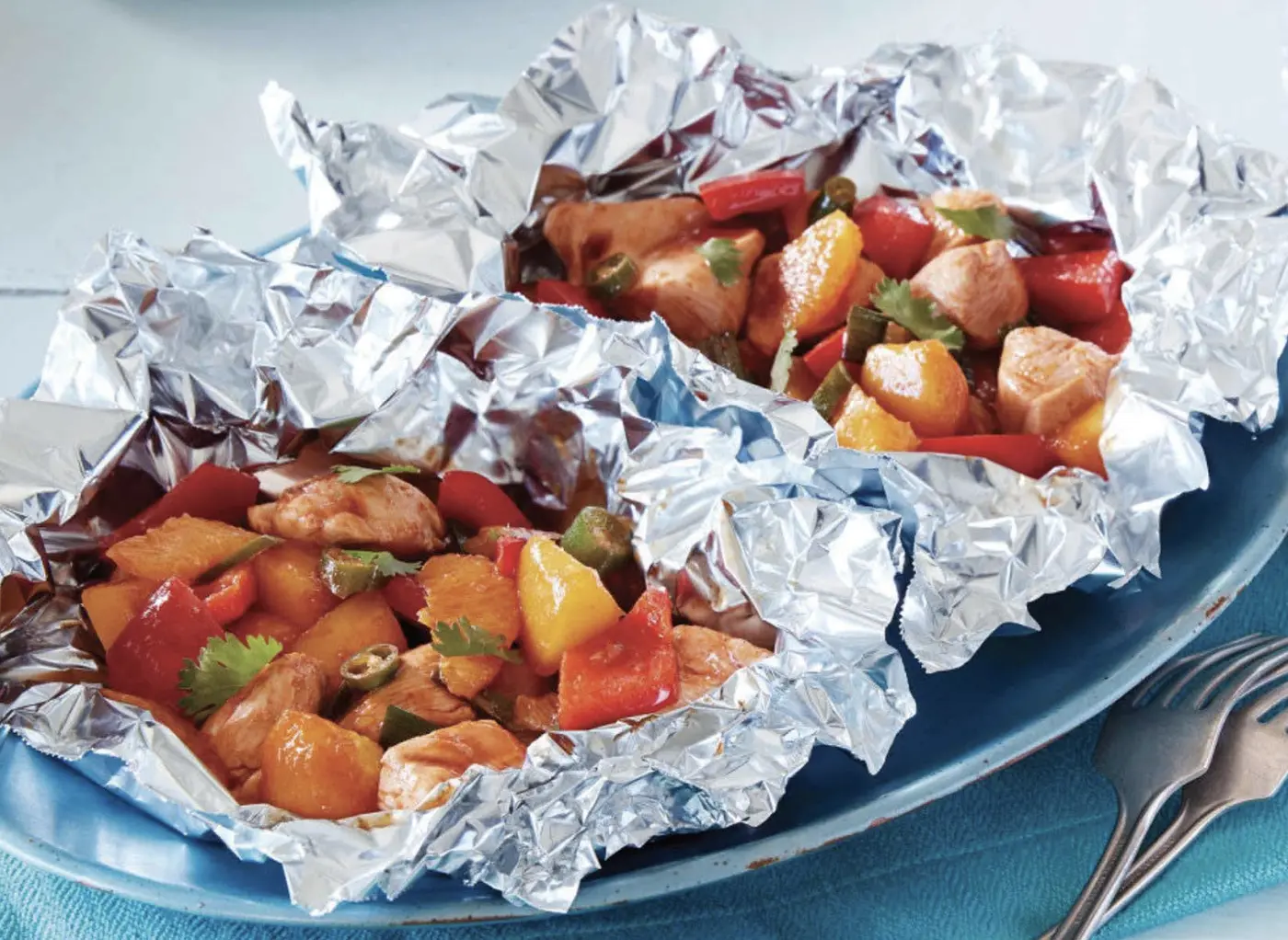

Yes, when the appliance instructions and the particular foil product allow the intended use. Lining a baking pan, covering a dish and lining the oven itself are different decisions. Aluminum’s melting point is not a usable cooking limit or proof that a particular arrangement is safe.
Start with the equipment and food you actually have. A recipe that says “cover with foil” cannot establish compatibility with every oven, cooking mode or packaging component.
Make three checks before tearing off a sheet
1. Read the appliance manual. Find the instructions for your model and the mode you plan to use. Check foil restrictions, permitted cookware and placement. Do not carry instructions from a full-size oven over to a countertop appliance, or from baking over to broiling. If the proposed arrangement is unclear, ask the appliance manufacturer before using it. 2. Read the foil packaging. Identify whether it is ordinary, heavy-duty or coated non-stick foil. Follow its intended uses and any handling restrictions. A different thickness or a familiar brand name does not resolve an appliance restriction. 3. Check the pan, lid and food. Confirm the cookware is suitable for that mode and inspect each separate component’s instructions. Check food-contact restrictions too. Reynolds notes that highly acidic, spicy or salty foods can cause pinholes or discoloration in foil. For an uncertain combination, use compatible cookware without a foil liner.
Line cookware only where permitted
A foil-lined pan still needs to be used as the pan and appliance manufacturers specify. Keep the distinction clear: a liner inside cookware is not permission to spread foil over the oven floor, rack or openings.
GE’s foil guidance warns against lining oven bottoms and covering whole racks; trapped heat and obstructed airflow can create hazards. Follow your own model’s instructions for placement and clearances, rather than borrowing a distance from another appliance’s guidance.
If easy cleanup is your goal, first consider cookware that can contain the food and its drips. Do not improvise a floor liner to compensate for an unsuitable pan.
Treat broiling as a separate decision
Permission to bake with foil does not establish permission to broil with it. Check the appliance, pan and foil instructions specifically for broiling before proceeding. “Heavy-duty” alone is not an approval for every setup.
GE’s broiling advice refers to purpose-designed pans and grids and directs users to model-specific rack positions. Use the complete directions for your equipment; a general tip about cutting foil is not a substitute. If the instructions do not establish compatibility, choose a permitted setup without foil.
Check disposable trays and lids separately
An aluminum tray and its supplied lid are separate products for cooking decisions. A lid intended for transport is not automatically suitable for heating. For example, Reynolds’ pans-with-carriers FAQ explicitly excludes its supplied lid from oven use. That is a product-specific instruction, not a specification for other brands.
For your tray, verify the intended cooking mode, any support requirements and the instructions for its coating, lid and other accessories. An oven-use statement about the tray should not be extended to the entire pack.
Two hypothetical kitchen examples
- A covered casserole: Check whether the dish and foil suit the recipe and appliance mode. Follow the recipe’s covering instructions only after those checks; do not assume every fitted lid can go in too.
- A tray that may drip: Select suitable cookware and verify any proposed drip-catching arrangement in the manual. Easy cleanup does not justify covering the oven base or a complete rack.
Before heating, confirm the mode, cookware, foil placement and every component you intend to leave inside. If one instruction is missing or conflicts with another, resolve it with the relevant manufacturer first.


