
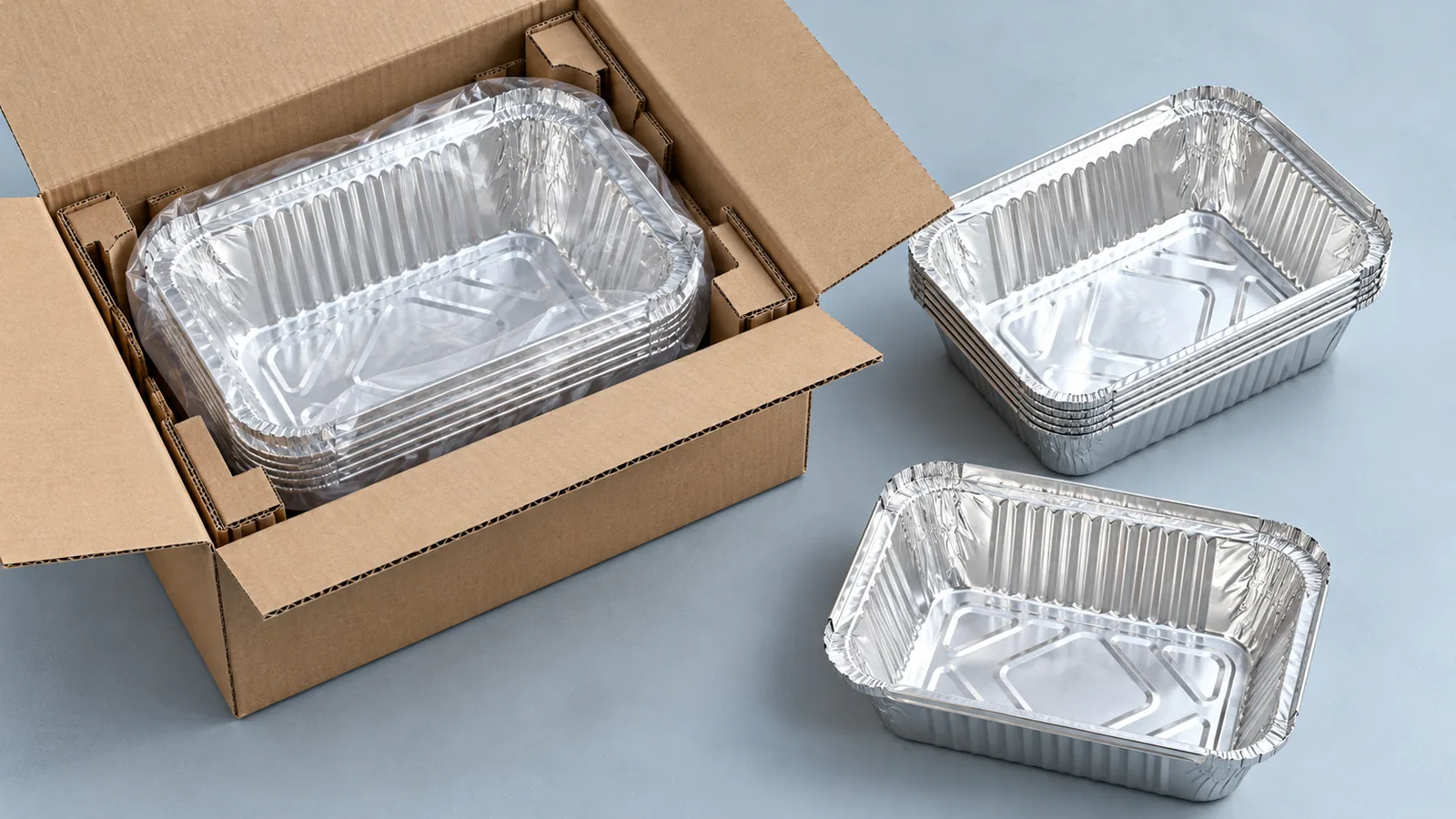
An empty foil tray sample can look acceptable on arrival while leaving an important question unanswered: will the production packing protect a full carton through your distribution route? Before approving a bulk order, review the tray, nested stack, inner packing and shipping carton together.
This checklist is for importers supplying Europe and Canada. It proposes purchasing and receiving checks for empty trays. Agree the acceptance criteria with your supplier and, where needed, a packaging specialist before testing or shipment.
1. Describe the route beyond the destination port
Write down each stage: factory dispatch, sea or air transport, import warehouse, pallet breakdown, onward delivery and customer receiving. State where cartons travel individually and where they stay on pallets. Include any repacking by your distributor.
ISTA says distribution knowledge is critical when selecting tests and interpreting results. See its design and testing guidance.
For a Canadian distributor, distinguish an incoming pallet from cartons later sent by parcel carrier. For a European order, identify the destination country and the retailer or warehouse receiving the goods. Record UK destinations separately from EU destinations in your order brief. These are route descriptions, not claims that one packing specification meets every market's requirements.
2. Request a representative packed sample
Ask for the proposed production arrangement, including the tray model, pieces per stack, inner bag or sleeve, stacks per carton, protective inserts, carton specification and closure method. Request carton dimensions and gross weight as order-specific values to confirm.
ISTA recommends production-representative products and packaging, with damage criteria agreed before testing. The same ISTA guidance explains this preparation.
If a sample is sent with extra courier protection, ask the supplier to identify the additional outer packing. Record separately what belongs to the production carton. Keep one untouched comparison sample and photograph the packed arrangement before opening it.
FirstAlu's current catalogue includes model C142. Use the model code when discussing a sample from the foil container range, then confirm the actual specification and packing offered for your order. The cover illustrates a possible packing arrangement; it is not a confirmed C142 packing specification.
3. Agree what counts as unacceptable damage
Avoid a single instruction such as “no dents.” Make an illustrated acceptance sheet with your supplier, using the approved sample as the reference. Separate appearance observations from failures that affect the buyer's handling process.
Consider recording these checks:
- Rim condition: photograph any bent, folded or uneven sections; assess the required closure with the exact proposed lid, if included
- Stack separation: remove trays from the top, middle and bottom of the sample stack using the intended handling method; record sticking and any deformation during separation
- Wall and base condition: record creases, punctures or distorted corners against the agreed sample photographs
- Inner protection: check for tears, displaced supports or exposed trays, and record the position of each observation
- Carton condition: note crushed corners, open seams, wet areas or a changed carton shape before opening
Agree the sample quantity, inspection positions, defect definitions and decision rule in writing. Do not borrow a defect percentage or test load from an unrelated tray. If a numerical tolerance is needed, have the buyer and supplier define and justify it for the particular product and use.
4. Match the transport check to the shipment
Ask a competent test laboratory which current procedure fits the complete route and packed product. ISTA lists different procedures for parcel shipments, less-than-truckload shipments and unitized truckloads in Europe. Its test procedure overview is a starting point for that discussion.
Do not describe manual shaking, an informal drop or one successful courier delivery as an ISTA test. Ask the laboratory to record the procedure and version, sample configuration, test conditions, results and photographs. Keep any informal unpacking trial clearly identified as an internal check.
For parcels, UPS Canada recommends rigid boxes, appropriate cushioning and securely sealed closures and seams. See UPS Canada's packaging tips. Use this as parcel guidance; ask the supplier or packaging specialist to assess pallet and sea-freight arrangements separately. Do not select a universal carton grade or cushioning thickness from this article.
5. Inspect on arrival before rearranging the contents
For an agreed trial shipment, photograph the unopened carton and its labels, then open it in a recorded sequence. Photograph the top layer, protective materials, stack positions and any affected trays. Keep the damaged packing until the supplier and carrier have confirmed what evidence they need.
Record the carton identifier, inspected quantity, affected quantity, defect type and position within the carton. Compare the results with the acceptance sheet. A clear outcome is “accepted,” “held for review” or “revised packing required,” with a named person responsible for the next step.
If a problem appears, change one agreed packing feature at a time where practical, document the revision and repeat the relevant checks before approving it. Keep the original result so the comparison remains traceable. Ask your packaging specialist whether the change requires renewed transport testing.
6. Put the approval into the order file
Save the approved packed-sample photographs, packing specification revision, acceptance sheet, test or trial record and written decision together. Ask for notice before the supplier changes the approved stack count, carton, inner protection or closure method. For the identification details, use the separate lot-code and carton-mark checklist.
Keep this transport review alongside the food-contact and intended-use review. Do not treat a favourable transport result as evidence for a food-contact, oven, freezer or recycling claim.
A practical request to send with your RFQ
Please propose production packing for our selected tray model and delivery route. Include stack count, inner packing, carton specification, carton dimensions, gross weight and closure method. Identify any extra packing used only to send samples. We would like to agree a representative packed sample, damage acceptance sheet and suitable transport checks before approving the bulk order. Please identify the packing revision on the quotation and notify us before changing it.
Add your destination country, onward distribution method, receiving requirements, lid option and intended order quantity. Contact FirstAlu to discuss the tray and packed-sample request with these details so the quotation and sample review can address the same arrangement.