
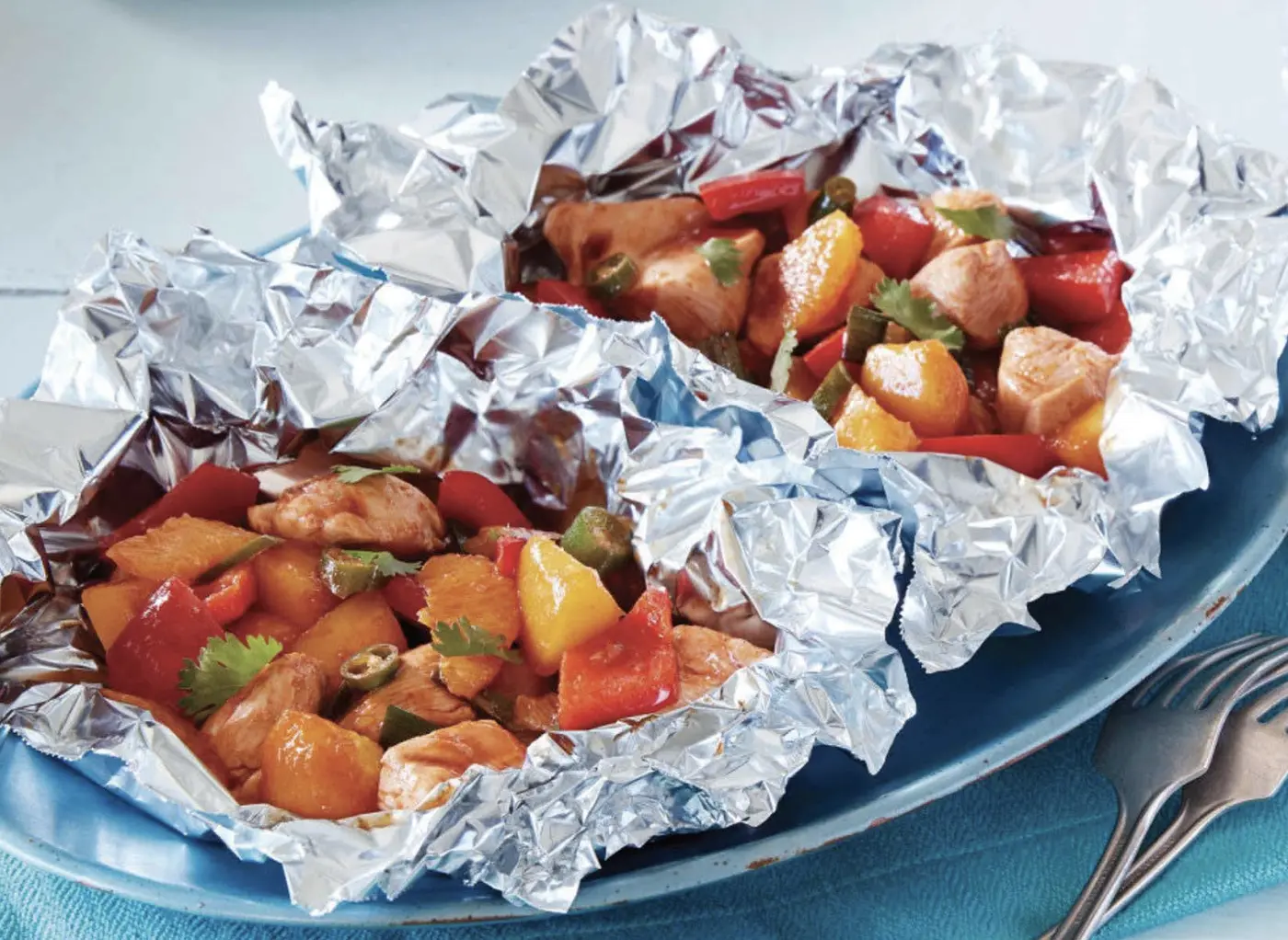
A foil container should be assessed against its intended job: the food load, lid fit, handling and transport conditions. A tray that feels firm when empty still needs to be checked when filled. Follow its handling instructions, including any requirement for support and protection from hot surfaces.
Thickness and weight are different measurements
Gauge describes material thickness; unit weight describes the mass of the finished container. Dimensions, shape and the amount of material used also affect unit weight. Comparing two trays by weight alone does not establish their thickness or strength.
Look at the design, then test the result
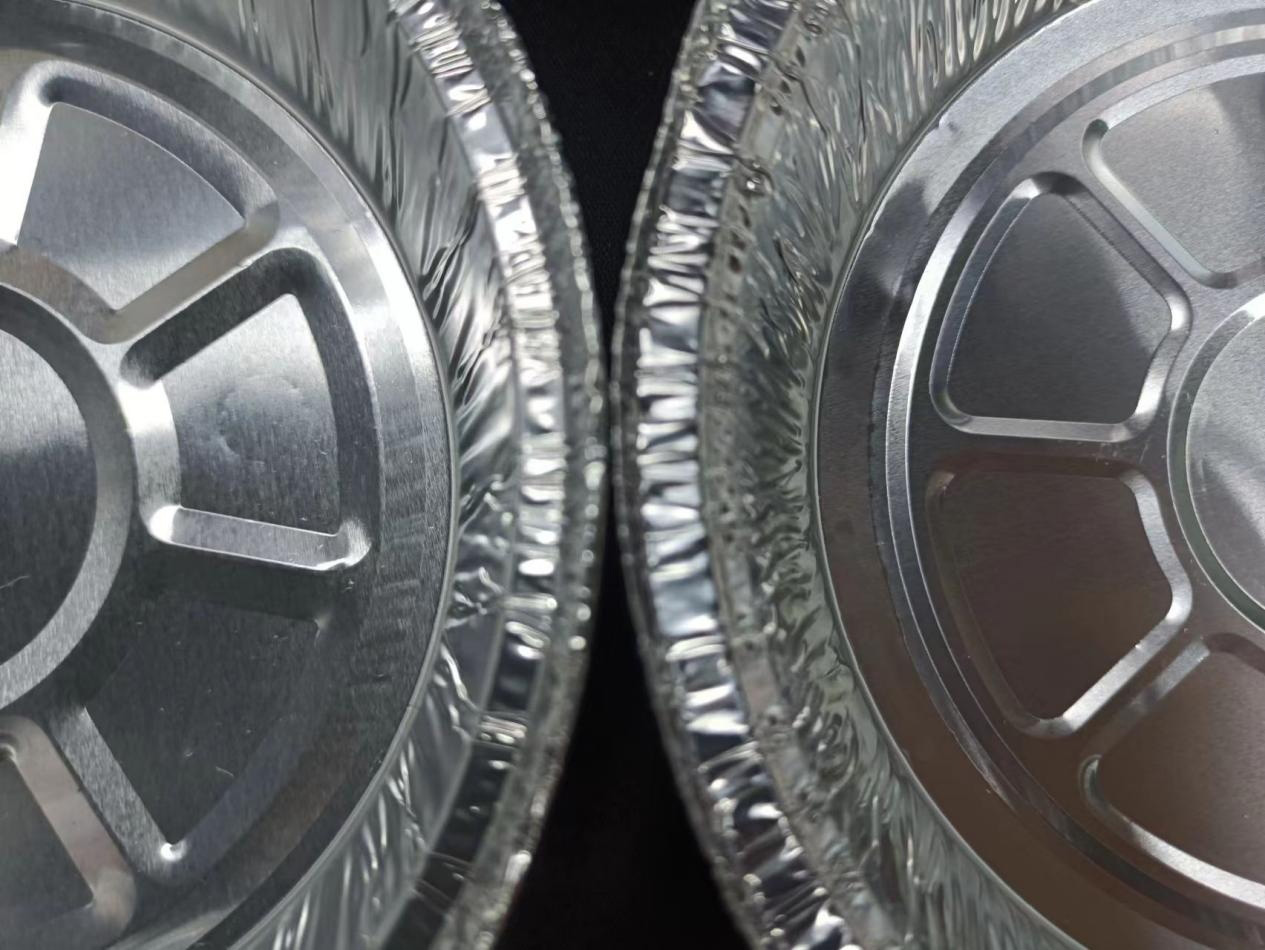
The original 2022 article discussed changes to the embossing on FIRSTALU containers. It included an old-and-new mould comparison for a 7-inch round dish. Embossing, base geometry, rims and corner folds are useful details to inspect, but the photograph is a design comparison, not a strength test.
For wrinklewall containers, inspect the consistency of the corner folds and the condition of the rim. Compare samples under the same agreed food load, filling conditions, lid arrangement and handling sequence. Record bending, leakage, lid movement and damage rather than relying only on visual appearance.
Compare the complete cost
A design change may allow a different material specification, but any saving must be checked against an actual quotation and the required performance. Include lids, packing, freight and damage or rejection costs. The original mould photographs do not establish a measured cost saving or a lower carbon footprint.
