
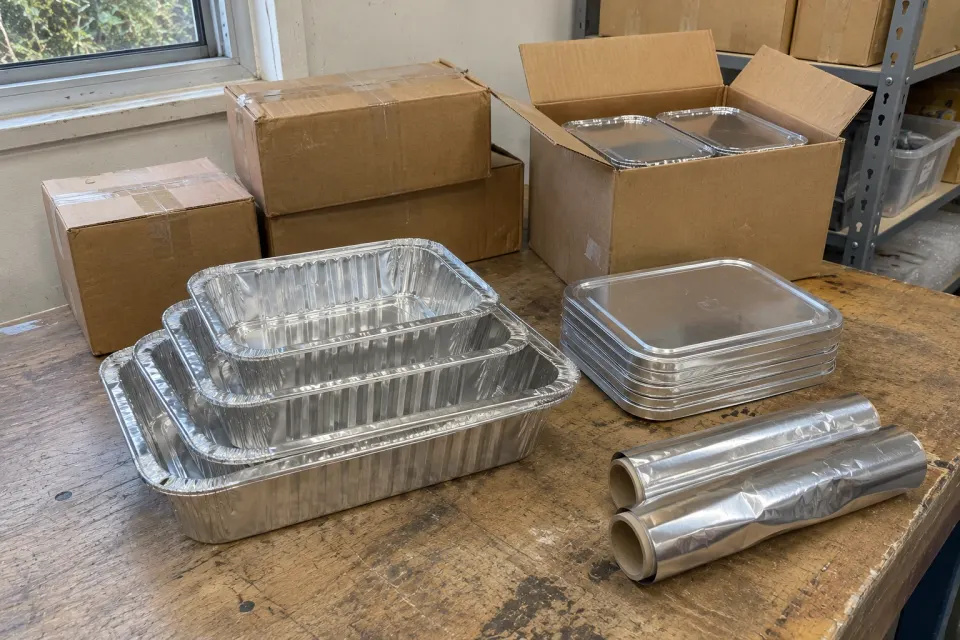
To start an aluminum foil business, first choose whether you will distribute finished packaging, rewind purchased foil or form containers. That decision determines your startup budget, mold requirements and cost per saleable product.
This guide focuses on food-packaging businesses: what to budget, how to estimate profit and how to find customers before committing to more stock or capacity.
1. Choose distribution, rewinding or container forming
| Model | What you buy and sell | Main commitments |
|---|---|---|
| Distribution or importing | Buy finished trays, lids or rolls and resell them | Opening stock, storage, freight, delivery and customer credit |
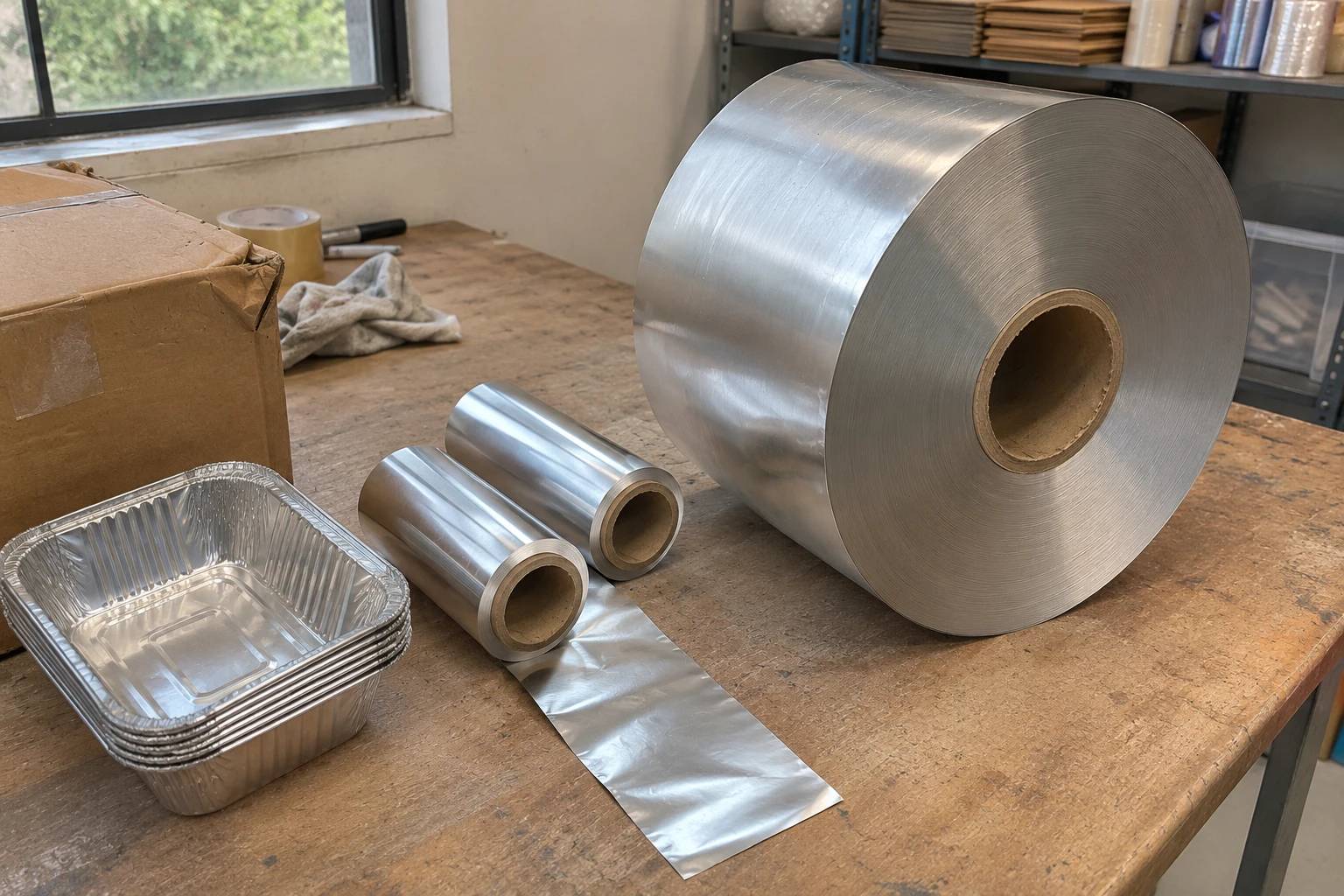
| Foil rewinding | Buy jumbo foil and rewind it into smaller rolls | Rewinder, suitable foil, cores, dispensing packs and process control |
| Container forming | Buy suitable foil stock and form containers | Press, format-specific molds, auxiliary equipment, operators and quality control |
Producing foil from aluminum metal is a separate upstream project. The European Aluminium Foil Association describes rolling and downstream conversion as distinct processes. A rewinder does not produce foil from metal.
2. Identify your first buyers
Choose a starting channel: takeaway restaurants, caterers, bakeries, packaging wholesalers or retail shops. Ask buyers for their current product reference, order quantity, reorder interval, lid requirement, delivered price and payment terms. Record whether they buy individual trays, tray-and-lid sets, rolls or cartons.
Approach local buyers with an identified sample, case specification and delivered quotation. Offer a paid trial under their normal conditions. After delivery, track product acceptance, payment and the next order. This tests both demand and the service you can provide.
3. Define a focused opening range
Start with products that answer those buyer requirements. For each candidate SKU, record:
- Trays: dimensions, capacity definition, rim, intended food and closure.
- Rolls: width, declared length or net foil mass, thickness, core and dispensing pack.
- Packing: selling unit, quantity per carton, carton dimensions and identification.
Check the exact tray-and-lid combination. Ask whether the quoted roll weight includes the core or packing; compare net foil weight. Request carton and shipment details before comparing freight quotations. Our first-range guide for distributors covers assortment selection.
4. Build the startup budget, including molds
Separate setup purchases from working capital:
| Route | Setup items to quote | Cash needed to operate |
|---|---|---|
| Finished-packaging distribution | Storage setup, handling equipment, business setup and any agreed custom development | Stock, inbound freight and import payments, local deliveries and customer receivables |
| Rewinding | Rewinder, required core/packing equipment, installation and training | Foil, cores, packs, wages, utilities and customer receivables |
| Container forming | Press, starting molds, required air/scrap/stacking/packing equipment, installation and training | Foil, lids, packing, wages, utilities and customer receivables |
Do you need to pay for a mold? Buying a supplier's existing standard container is different from commissioning a new shape. Ask whether the product can use existing tooling and whether the quotation includes any development charge. For custom production, agree the drawing, tooling ownership, maintenance, minimum orders and any tooling charge built into the unit price.
What can container molds cost?
Public supplier references checked on 16 November 2026 show why tooling deserves its own budget:
| Published reference | Advertised USD range |
|---|---|
| MTED — wrinkle-wall molds | $3,000–15,000 |
| MTED — smooth-wall molds | $5,000–18,000 |
| LIKEE seller listing — container mold, per set | $8,500–13,500 |
These are supplier-published references for differing configurations, not comparable bids, an industry average or FirstAlu prices. Obtain a drawing-based quote covering cavity count, press compatibility, foil specification, trials, spare parts and delivery. Ask which formats require separate tooling and whether inserts can cover any changes.
For a planning example, a hypothetical $6,000 mold allocated over 300,000 saleable units adds $0.02 per unit. At 100,000 units, the allocation is $0.06. This is a tooling-cost allocation, not a supplier quote or the product's total cost. Do not charge the same tooling twice if depreciation is already in your fixed-cost budget.
5. Estimate profit from actual selling prices and costs
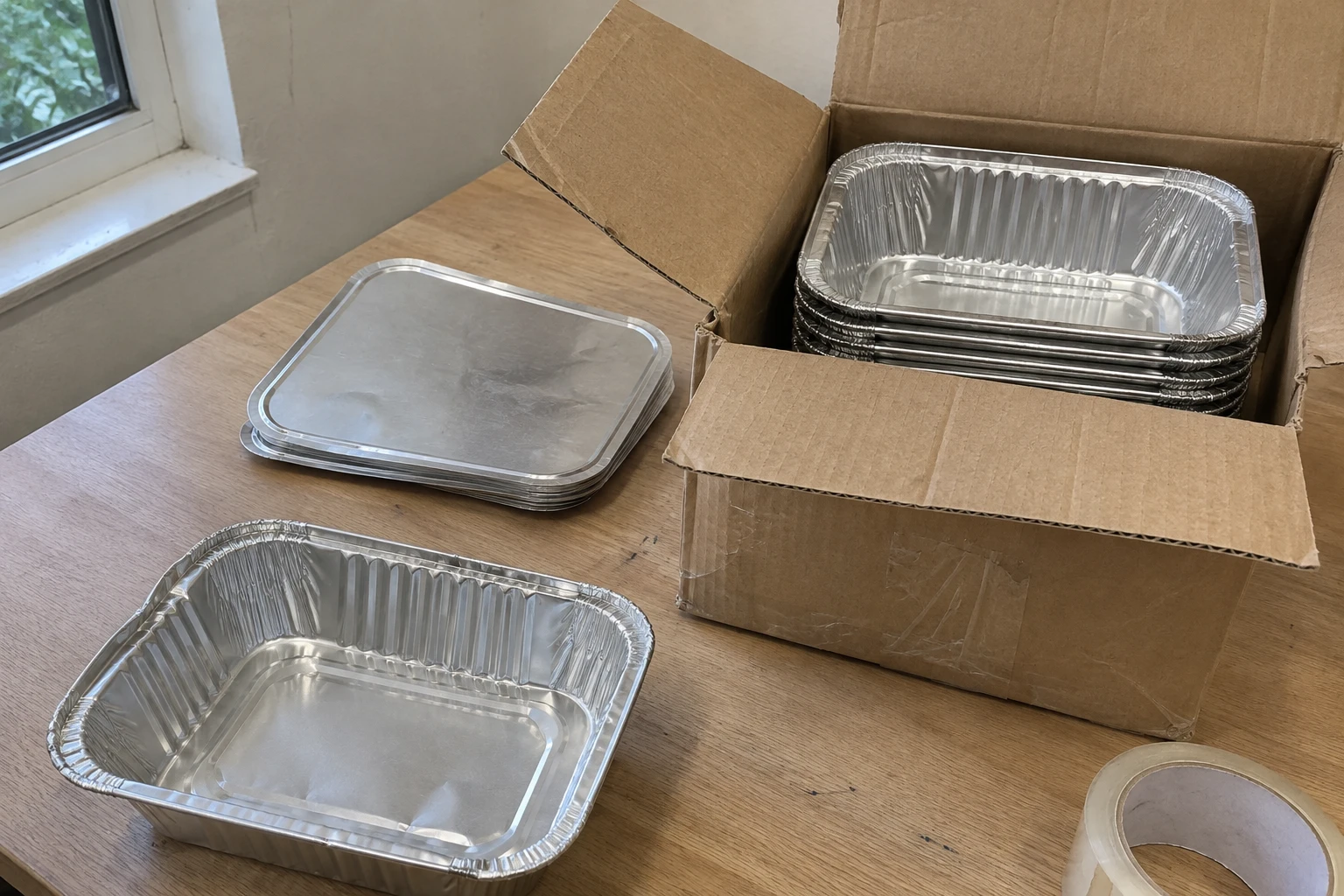
For finished-packaging distribution, calculate the cost of the complete saleable pack. Include required lids, packing, inbound transport, insurance, applicable non-recoverable import charges and handling. Add only costs not already covered by the delivery terms. The International Trade Administration's landed-cost guidance outlines the main shipment-cost components.
Use one consistent unit, such as a saleable carton:
- Landed cost per carton = allocated acquisition and inbound costs ÷ expected saleable cartons, allowing for damage or shortages.
- Contribution per carton = net selling revenue − landed cost − variable selling and delivery costs.
- Monthly operating result = total contribution from cartons sold − monthly fixed operating costs.
Use revenue after discounts and returns, excluding sales taxes collected where applicable. For manufacturing, replace purchased finished-goods cost with your own variable production costs: foil input and yield, cores or lids, packing and variable conversion costs. Separate fixed and variable portions of labor and utilities. Deduct scrap recovery only once.
How much could you earn? A worked example
Illustration only — these are invented planning inputs, not market prices or typical earnings. Assume one unchanged carton specification: net selling revenue $50, landed cost $36 and variable selling/delivery cost $4. Contribution is $10 per carton. Assume $1,500 monthly fixed operating costs, including the salaries, rent, administration and depreciation applicable to this example.
| Cartons sold per month | Sales revenue | Total contribution | Operating result before interest and tax |
|---|---|---|---|
| 100 | $5,000 | $1,000 | −$500 |
| 200 | $10,000 | $2,000 | $500 |
| 400 | $20,000 | $4,000 | $2,500 |
Break-even is 150 cartons: $1,500 ÷ $10. If landed cost rises by $2 per carton, contribution falls to $8 and break-even becomes 188 whole cartons. The SBA's break-even explanation supports this fixed-cost/contribution relationship.
This is why a margin percentage alone cannot answer what you will earn each month. Use achievable sales, not machine capacity. With multiple SKUs, total their individual contributions. Interest, tax and collection timing still affect the owner's final return and cash position; operating break-even is not investment payback.
6. Fund the stock-to-cash gap
Put setup payments, supplier deposits and balances, freight, import payments, payroll, rent and customer collections on a dated cash forecast. Include recoverable taxes when paid and the expected recovery date, even if they are excluded from your product-cost calculation.
The lowest forecast cash balance identifies the funding gap before a reserve. Set customer credit limits and overdue-order rules before offering payment terms. More sales can require more stock and receivables funding before the cash arrives.
7. Approve the product and supplier
Test identified samples against the food, closure, storage and handling requirements. Retain the approved specification and sample version. Agree packing, traceability, change notification and complaint handling.
Obtain food-contact documents relevant to the product, intended use and destination market. The European Commission's overview is an EU starting point; a generic “food-grade” claim is not worldwide approval. Confirm local registration, tax, import, packaging and operating obligations for your role.
Use our supplier checklist and food-contact document guide to prepare the review.
8. Verify production before buying machinery
If you choose rewinding or forming, require a trial with the proposed input foil and finished format. Review accepted packed output, material yield, rejects, stops and changeovers. Get written requirements for utilities, guarding, staffing, installation, maintenance and spares.
A production forecast should use accepted output and realistic operating time. Confirm that customer orders and available cash support it before buying more capacity.
Prepare your first sourcing request
Download the foil-business launch worksheet to record product specifications, tooling quotations, landed costs, profit scenarios and cash timing.
For finished packaging, explore FirstAlu's containers, foil rolls and lids. Contact FirstAlu with your country, customer channel, product references, trial quantity and expected repeat demand. Request product-specific availability, samples, MOQ, packing, delivery terms and any custom-development charges.