
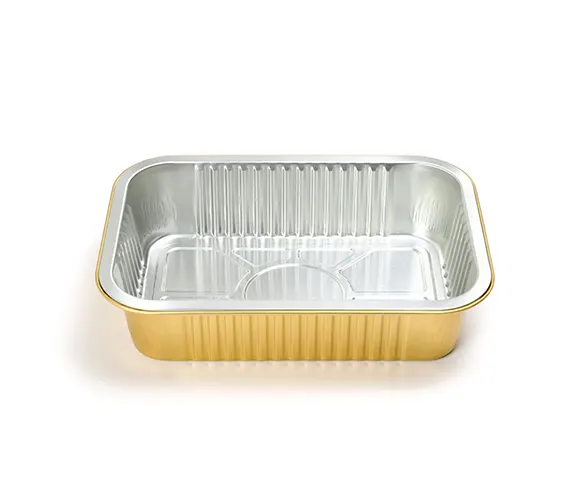
Smoothwall and wrinklewall describe tray styles, not a universal quality ranking. Start with smoothwall when an even wall appearance or a model designed for your sealing process is part of the brief. Include wrinklewall when comparing formed-foil formats for hand-packed takeaway, bakery or catering. Choose the exact tray and lid together, then test the filled pack.
For an importer, the useful comparison is the complete product: shape, usable fill, rim, lid, material specification and packing. Neither wall name alone establishes load capacity, heat-seal compatibility or heating instructions.
What smoothwall and wrinklewall describe
Wrinklewall trays have visible folds in the formed foil around their walls. Smoothwall trays have a more even wall appearance, although a design can still include deliberate ribs or base features. View the sidewall, base and rim together when comparing samples. Manufacturer catalogues such as i2r’s product selector distinguish these tray types.
Smoothwall: review the surface separately
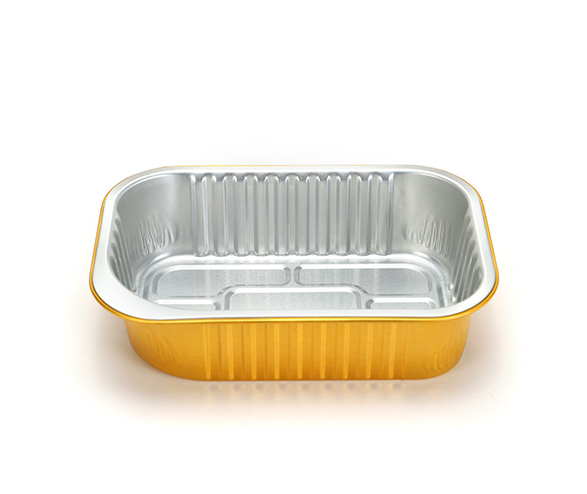
Smoothwall does not mean lacquered. For example, Contital lists both plain and lacquered smoothwall trays. Ask separately about the food-contact surface, any coating and the use it is intended to cover. Colour is not enough to identify the material system.
Wrinklewall: inspect folds, corners and rim
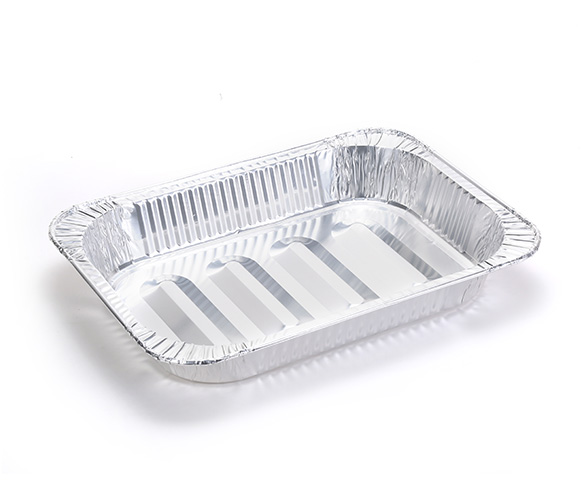
Treat the wall style as an initial selection filter. Request a product drawing and a labelled sample before deciding that two trays are interchangeable.
Compare the complete pack
Use the same food, portion and handling brief for both candidates. The table below turns a visual comparison into a sample review.
| Comparison point | Smoothwall candidate | Wrinklewall candidate | What to verify |
|---|---|---|---|
| Structure and appearance | Examine the even wall areas and any designed ribs. | Examine the formed folds, corners and rim. | Check a physical sample, including the base, rather than judging only a front photo. |
| Portion fit | Review internal space and the intended fill level. | Review internal space and the intended fill level. | Compare top inside, base, height and working fill; nominal capacity alone is insufficient. |
| Rim and lid | Identify the exact flange or rim and proposed closure. | Identify the exact rim and proposed closure. | Record tray and lid codes, dimensions and closing method. |
| Filled handling | Trial the selected model with the intended load. | Trial the selected model with the intended load. | Observe base support, rim distortion and handling using the agreed method. |
| Stacking and dispensing | Check filled-pack stability and separation of empty trays. | Check filled-pack stability and separation of empty trays. | Use the real stack arrangement, lid and dispensing process. |
| Packing and cost | Request the tray, lid and packing quotation. | Request the tray, lid and packing quotation. | Compare complete-set cost and carton volume on the same commercial basis. |
A smoothwall sample and a wrinklewall sample may differ in size, material, weight and depth as well as wall style. Record those differences so that a successful trial is attributed to the tested product.
Match the tray to the food process
Hand-packed takeaway and catering
Start with portion fit, the time needed to close the pack and the way staff carry it. Test the proposed lid during normal service handling. For larger portions, agree whether the tray is supported underneath or placed in a carrier during transport. Evaluate either wall style against that handling method.
Bakery and food presentation
Compare the actual finished product in each tray: usable base area, release from the tray where relevant, appearance and the cover required after preparation. If baking or reheating is involved, request instructions for the exact tray and lid separately.
Chilled or frozen ready meals
Specify filling, cooling, storage and consumer preparation. If your process needs film sealing, ask for a tray explicitly offered for that sealing system and arrange an equipment trial. A smoothwall label by itself does not confirm a suitable seal layer, tooling or process settings.
FSANZ’s food-packaging guidance relates suitability to the food and conditions of use. Describe your process to the supplier and request supporting documents for the proposed materials. Sample handling checks and food-contact document review answer different questions.
Check the rim and lid as a pair
The wall and rim need separate attention: i2r’s catalogue provides distinct filters for tray type and rim style. Request the rim drawing, lid reference and closing instructions for your selected product.
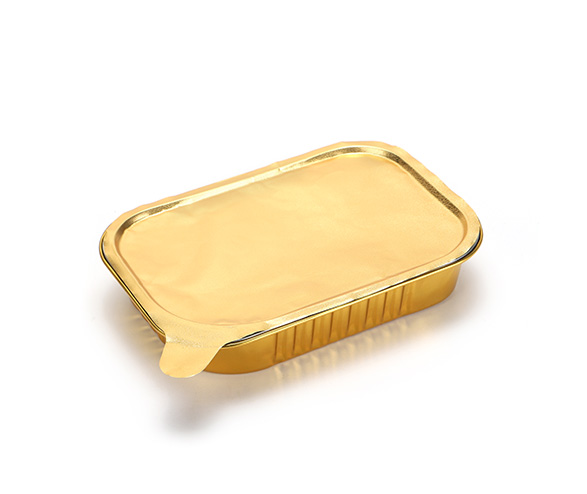
For a lid held by folding the rim, check the full perimeter after closing. For a clip-on lid, check engagement and clearance above the food. For film sealing, agree the tray, film, seal layer, tooling and trial settings with the relevant suppliers. Test any required transport tightness under recorded conditions.
A lid can have different use limits from its tray. Confoil’s 6118-32 product page specifies a matching clip-on lid for chilled contents, excluding oven and microwave use. Obtain instructions for your own proposed combination; do not transfer another manufacturer’s specifications to it. Browse FirstAlu lid references alongside the tray.
Run a controlled sample comparison
Set acceptance criteria before the trial and record the product codes, sample batch and specification revision. Use these six checks:
- Measure and identify. Compare dimensions, stated capacity definition, unit weight or thickness where specified, rim and lid with the agreed drawing.
- Fill consistently. Use the actual food or an agreed representative load, recording portion weight, fill level and temperature.
- Close and handle. Apply the intended closure, carry the pack as staff will and record deformation, lid movement or leakage under the agreed conditions.
- Stack and dispense. Test the planned filled stack and separation of empty trays. For automated work, run the intended equipment and note interruptions.
- Check the full use sequence. Include only the filling, storage and heating steps permitted for the proposed components. Inspect the pack after each relevant stage.
- Review the packed carton. Check inner protection, nested-stack condition, carton dimensions, quantities and identification before approving the packing specification.
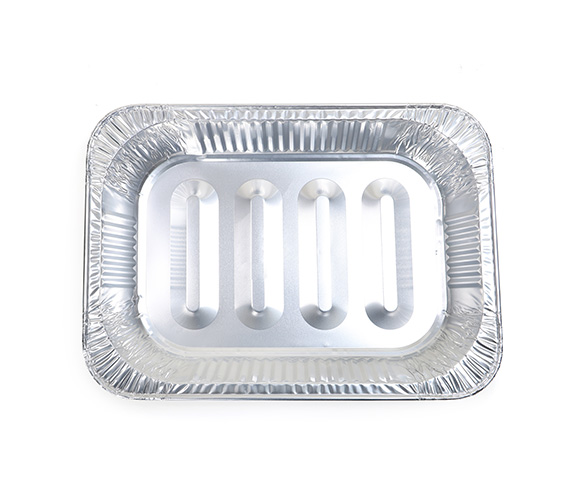
Keep an approved reference sample and the completed record. Agree how material, coating, tooling, lid or packing changes will be communicated before repeat orders. Confirm order quantities, sample charges and production timing in the quotation for the selected products.
FirstAlu product references to start a discussion
FirstAlu manufactures foil containers and lids at its own factory in Luoyang, China. Our supplier profile and foil container range provide starting points for product selection.
Two catalogue references illustrate the available styles:
- C161-475 smoothwall container: listed at 475 ml, with a top size of 161 × 111 mm and height of 38 mm.
- C430 wrinklewall container: listed at 5,830 ml, with a top size of 428 × 308 mm and height of 68 mm.
These are different sizes, not equivalent substitutes. Use them to identify a style, then request a model that fits your portion and lid requirements. Confirm measurement methods, tolerances, coating and matching components before ordering.
Buyer questions
Is smoothwall always stronger?
The name alone cannot establish that. Compare the selected tray’s specification and filled-load trial against your acceptance criteria.
Can smoothwall trays always be heat sealed?
Confirm the exact model, rim, material system, lidding and equipment. Arrange a trial where heat sealing is required.
Can I keep the same lid when changing wall style?
Only after confirming compatibility with both tray references. A similar size or nominal capacity does not establish a shared lid.
To compare options for an order, send FirstAlu your application, portion weight, current tray or drawing, closing method and destination. Request proposed tray and lid references, samples and written specifications for review.