
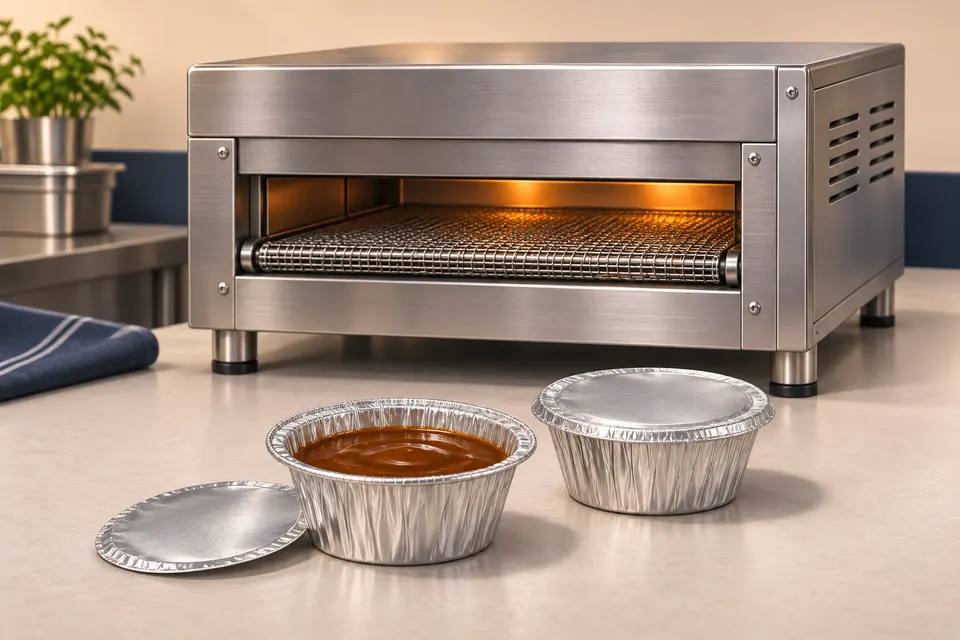
Choosing a disposable aluminium sauce pot for a conveyor oven means selecting the cup, lid and food process together. For gravy, dipping cheese and other hot sauces, a useful trial must establish three results: the food reaches its required temperature, the lid stays fitted and the filled pack can be handled without unacceptable leakage or distortion.
Start with the actual sauce, portion and oven conditions, then request an identified pot-and-lid combination. A nominal capacity or an oven-use description alone cannot establish the performance of the filled pack.
Three results to define before testing
Agree separate acceptance criteria for the food, closure and handling with the responsible teams.
| Result | Record | Decision |
|---|---|---|
| Food heating | Starting food temperature, fill, oven conditions and measurement method | Does the tested process meet the required food-temperature target? |
| Lid retention | Cup and lid references, closing method and condition after heating | Does the closure remain fitted as required? |
| Filled handling | Pickup, carrying and opening; leakage, spillage or distortion | Does the pack work through the intended service sequence? |
Why oven temperature is only part of the brief
An impingement conveyor oven directs heated air towards the product. Lincoln's 3240 operating manual identifies oven temperature, conveyor speed and airflow-related configuration among the factors affecting cooking time. Refer to the instructions for the actual oven model.
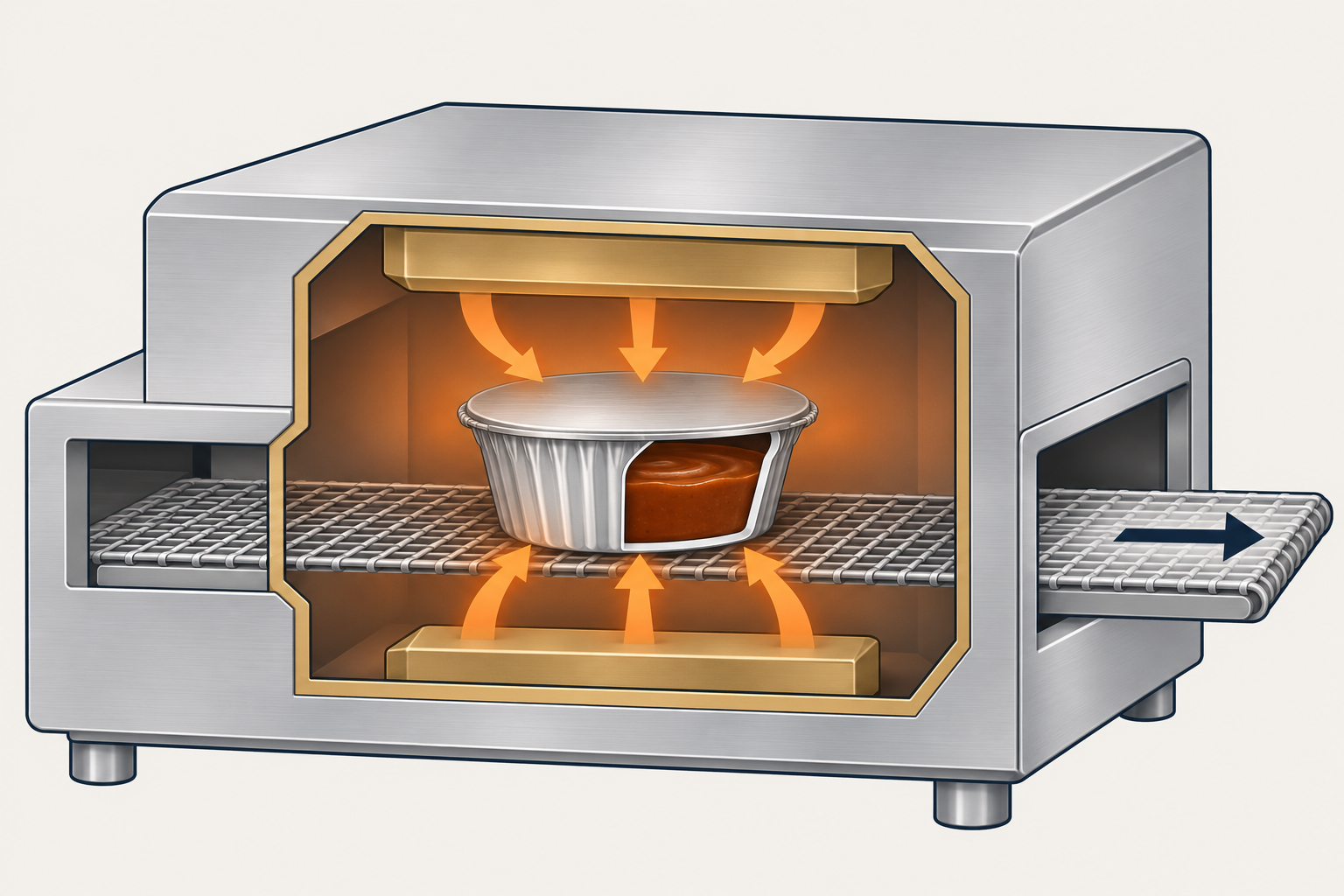
Distinguish the oven setting from the temperature achieved inside the sauce. Record the starting food condition, portion weight, fill depth, belt exposure and the cup's position or support.
If the lid must remain fitted, evaluate that configuration. An open-cup trial does not establish a closed-pack result. Agree how food temperature will be measured, including whether probe access affects the closure assessment.
Choose capacity around the sauce portion
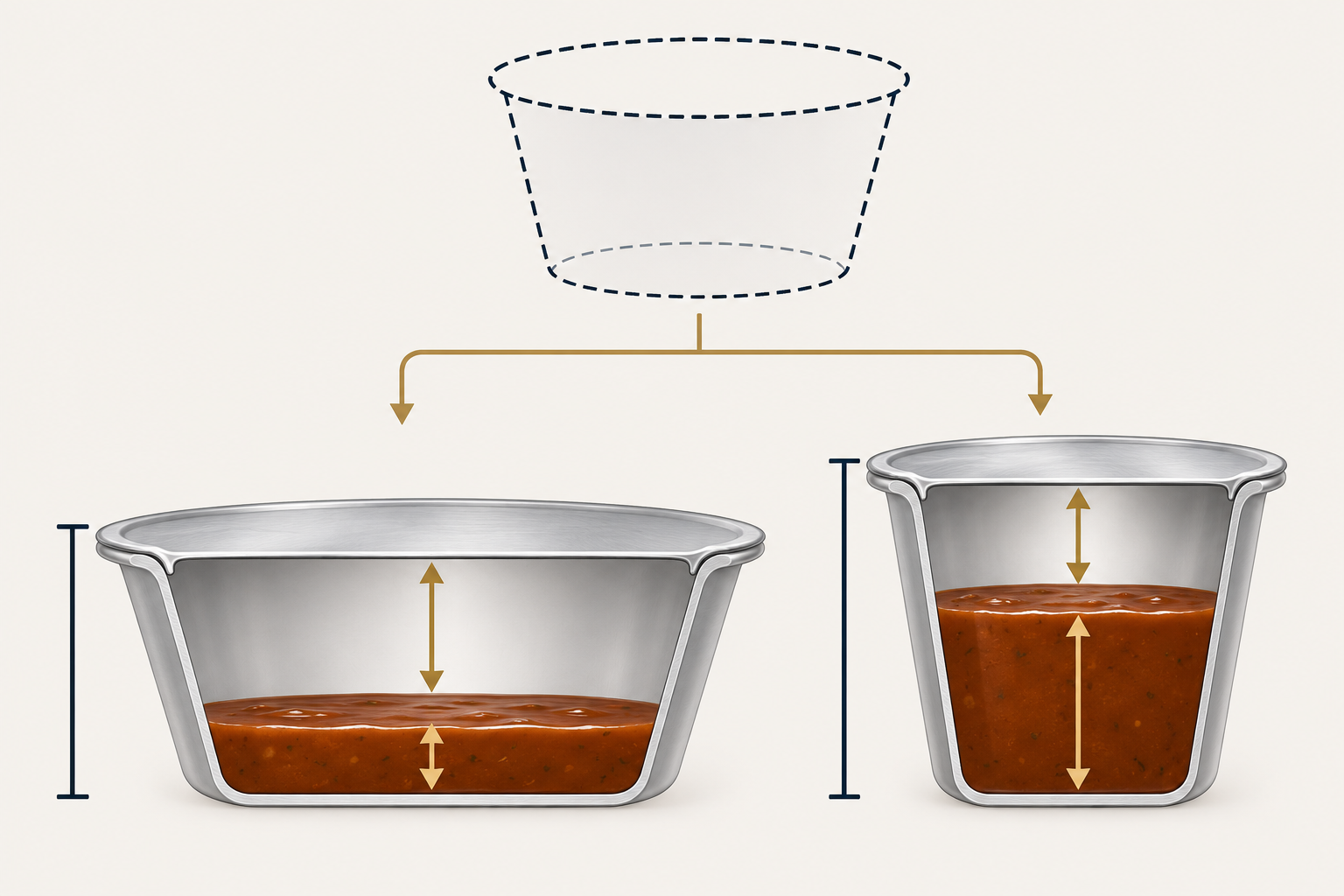
A container's capacity is stated by volume, while a sauce portion may be specified by weight. Equal weights of different recipes need not occupy equal volumes.
Measure the actual sauce portion and its fill level. Ask how the supplier defines nominal capacity, then check the space below the closed lid. Compare internal dimensions where they affect filling or closure.
A broad, shallow cup and a narrower, deeper cup may have the same nominal capacity but different fill depths and equipment footprints. Evaluate the selected geometry in the intended process rather than assuming a heating advantage.
Specify the aluminium lid construction
A metallic-looking cover may be formed aluminium, a foil membrane or foil-laminated board. Identify its construction and closing method. For an aluminium-only brief, clarify whether functional coatings or sealing layers are permitted; a board lid does not meet an all-aluminium requirement.
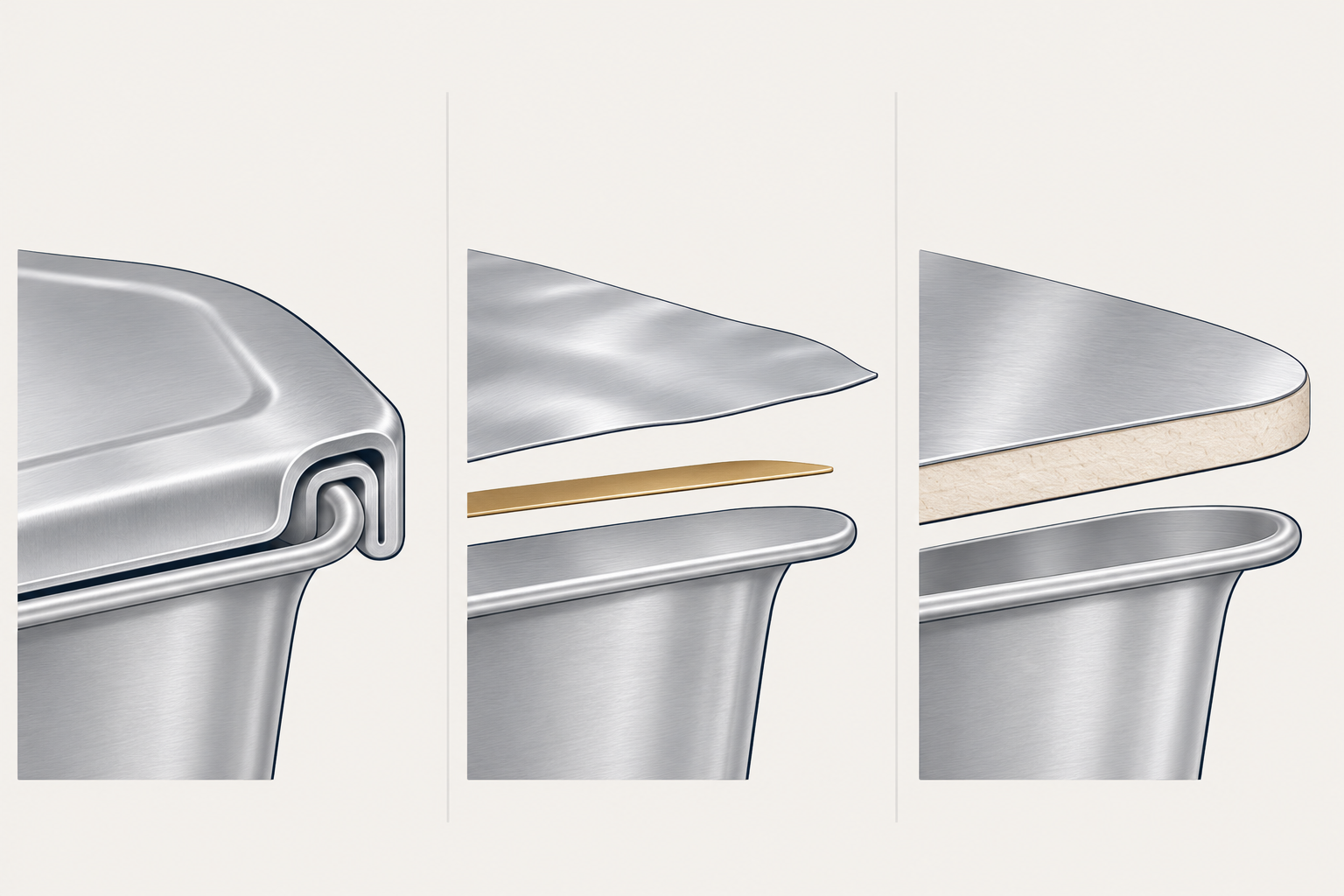
| Closure | Specify | Assess |
|---|---|---|
| Formed aluminium lid, mechanically closed | Matching rim, lid profile and closing action | Retention through heating and handling |
| Heat-sealed aluminium foil membrane | Cup sealing surface, foil construction, seal layer and equipment | Seal performance and opening under the intended conditions |
| Foil-laminated board lid | Board and other layers; permitted uses | Material restrictions and the supplier's heating instructions |
Lid retention and a hermetic seal are different requirements. Define the leakage and opening performance needed. If lifting, leakage or distortion occurs, retain the sample and review it with the component suppliers. Changes to venting, the rim or sealing method require renewed assessment.
Our foil container lids guide covers the broader closure choices.
Match the food-contact surface to the sauce
Describe the recipe, including relevant acidic, salty or oily ingredients, plus filling temperature, storage time and reheating. Obtain the material and surface specifications for both cup and lid.
FSANZ's food-packaging guidance identifies food type, contact, storage conditions and heating as factors affecting suitability. For the actual order, request documentation appropriate to the destination, product and intended use.
Where a coated option is proposed, review its documented use conditions alongside the closure. Our lacquered-container guide explains the food and coating information to collect. Material review and physical trials address different questions; keep both in the order file.
FirstAlu Y80: a 100 ml size reference
The Y80 round aluminium foil container has these catalogue values:
| Item | Y80 |
|---|---|
| Listed capacity | 100 ml |
| Top size | 80 mm |
| Bottom size | 55 mm |
| Height | 30 mm |
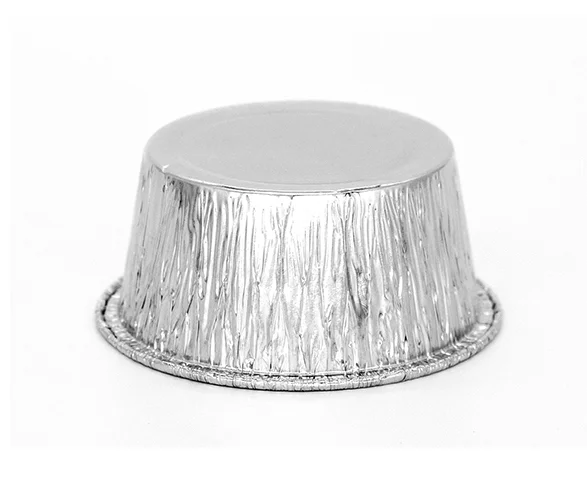
Use Y80 to discuss the required size. The photographs show the cup alone, not a matched lid or an oven trial. Confirm the current specification, available closure and complete sample combination before selecting it for a lidded sauce application.
Turn a sample trial into a purchasing decision
Identify the cup and lid revisions before testing. Use the actual food and intended filling, heating and service sequence within the components' and equipment's instructions.
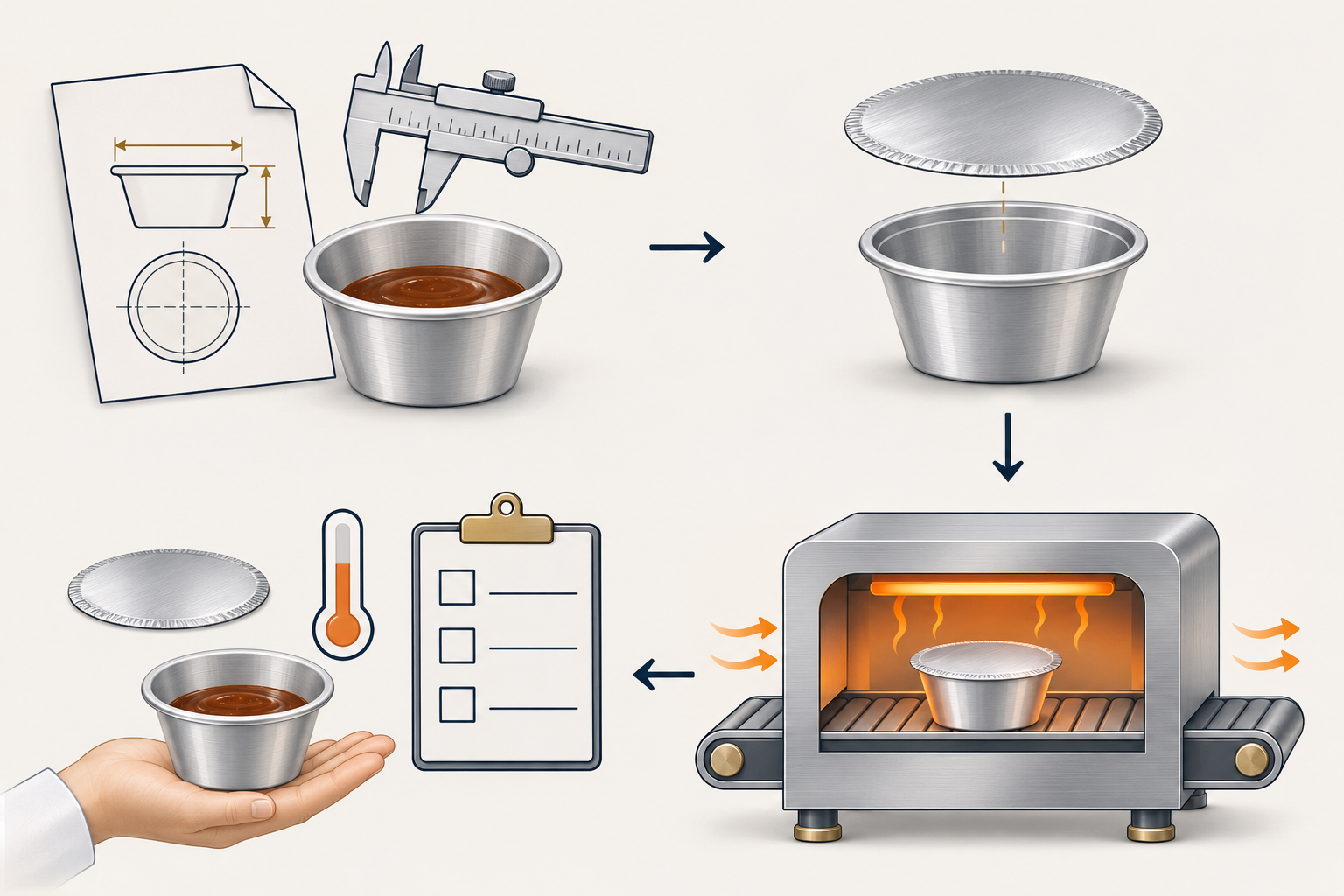
Keep the process settings, measurement method, photographs and outcomes together. These illustrative observations show why separate decisions matter; they are not FirstAlu test results.
| Observation | Purchasing interpretation |
|---|---|
| Cup and lid remain intact, but food misses its target | Review the food, geometry and equipment conditions; the process has not passed. |
| Food meets its target, but the lid moves or sauce escapes | The closure requirement has not passed. |
| The pack passes the oven stage but leaks during normal pickup | Extend assessment through the service sequence before approval. |
Existing tooling or a bespoke format?
Check existing cup and lid tooling first. If development is needed, identify the constraint: capacity, depth, footprint, rim or closure. Ask which changes require cup tooling, lid tooling or sealing-equipment changes.
Request development charges, sample stages, tooling ownership, minimum order quantities and timing separately from the recurring unit price. Compare the complete set—cup, lid, packing and delivery terms—on the same basis.
Buyer questions
Can the lid stay on in a conveyor oven?
Only use a specifically identified closure with supporting use guidance, then evaluate the complete pack in the intended process. Fitting before heating does not demonstrate retention during heating.
Does an oven-temperature rating prove the sauce's final temperature?
No. Establish the food result under the actual process conditions using the agreed measurement method.
What should a sample request include?
Send the sauce type, portion weight, desired capacity, cup or drawing, lid requirement, oven model, temperature, exposure, starting food condition and target result. Add destination, trial date, forecast quantity and material restrictions.
Contact FirstAlu, quoting Y80 where relevant, to discuss candidate samples and any development needs. You can also use the sauce-pot application brief to organise these requirements.