
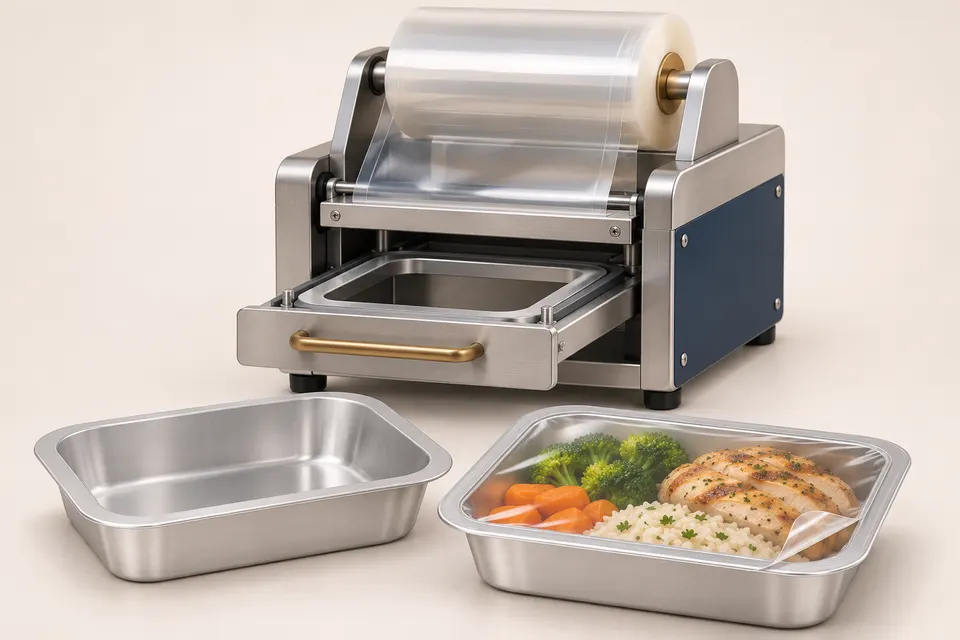
A replacement aluminium tray can look right, fit inside a traysealer and still fail to form an acceptable seal. For ready-meal buyers, the purchase is a combination of tray, lidding film, tooling and process—not a capacity on its own.
Before ordering heat-sealable aluminium trays, identify the exact film and machine setup the proposed tray must work with. Establish material compatibility, mechanical fit and filled-pack performance as separate decisions.
Define the complete sealing combination
“Heat-sealable” needs a specification behind it. Ask the tray supplier, film supplier and equipment supplier to review the same component references and application brief.
| Part of the system | Information to identify |
|---|---|
| Tray | Model, drawing revision, dimensions, rim profile and surface specification |
| Lidding film | Manufacturer, grade, sealing side, recommended tray surface and permitted use |
| Tooling | Machine model, sealing head, tray carrier and cutting format references |
| Food process | Recipe, portion, filling conditions, storage, transport, opening and any reheating step |
Keep the approved references together. A change to a tray coating, film grade or tool revision should trigger a review of the affected combination, even when the commercial product name stays the same.
For an overview of loose lids and other closures, see our foil container lids guide. This article focuses on film sealing and existing production equipment.
Check the flange, not just the outer dimensions
The flange is the outward rim where the film is sealed. A length-and-width measurement does not fully describe its corner shape, available sealing area or how the tray is supported underneath.
FFP's Esterpeel user guide notes that different flange radii can reduce sealing width even when a tray fits the tool.
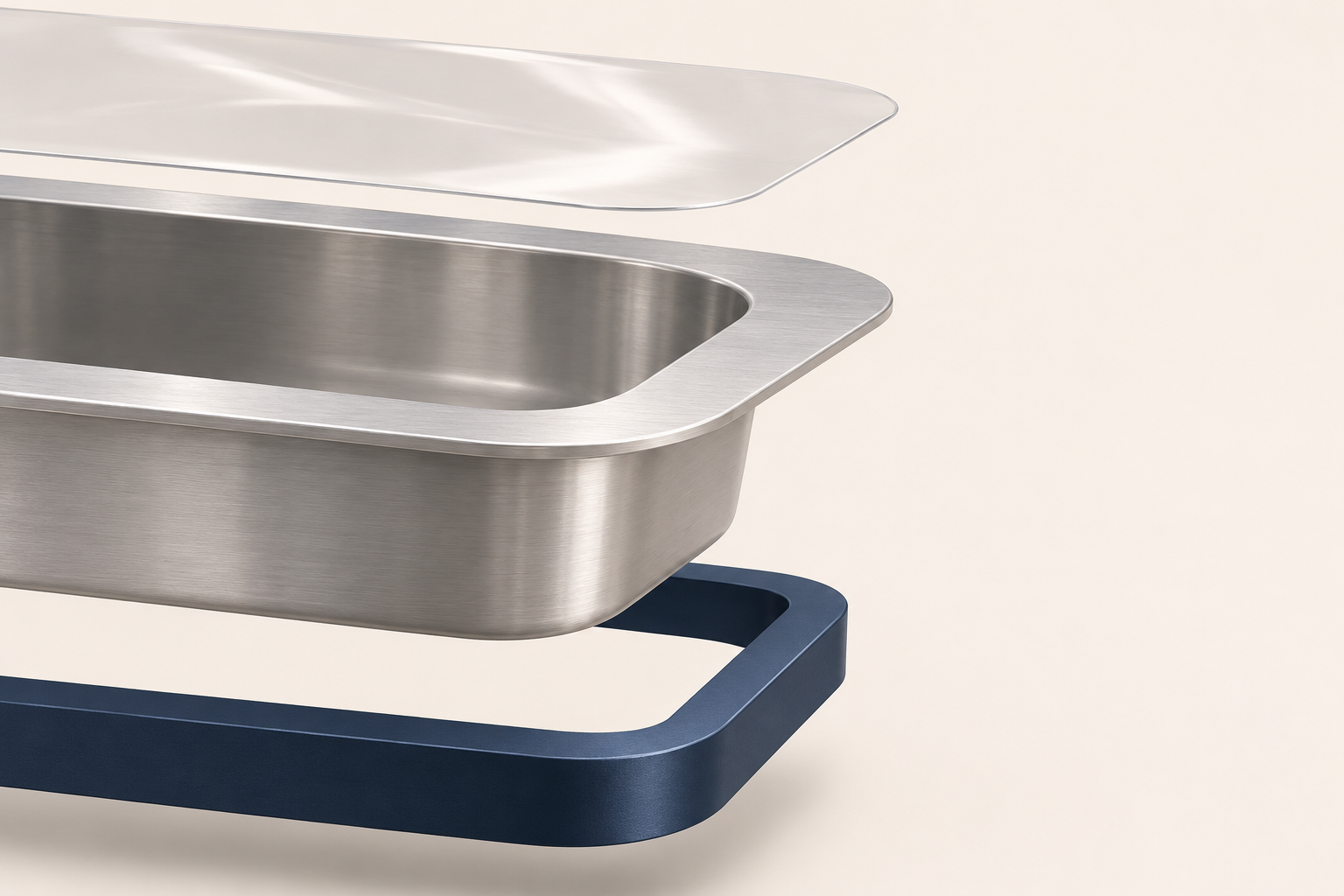
Request a drawing that identifies the sealing land, corner profile, flange level and relevant tolerances. Send the current tray drawing and proposed replacement to the tooling supplier. Ask which dimensions control acceptance on that particular tool.
A photograph helps identify the format, but cannot replace those dimensions. An empty tray sitting in a carrier establishes an initial fit observation; it does not demonstrate a continuous seal.
Match the tray surface to a specific film
Descriptions such as “clear”, “peelable” or “anti-fog” do not identify the complete film construction or its compatible sealing surface. Obtain the grade and the film supplier's recommendation for the proposed aluminium tray surface.
Where a coating is proposed, ask whether it is intended for film sealing, food resistance or both. Colour and a smooth appearance do not establish that function. Review the food-contact documentation for the actual food and destination, alongside the component specifications.
Separate sealing conditions from later use. For example, Wrapid's 60AL data sheet requires film removal before conventional oven cooking. A film's sealing temperature is not permission to leave it on during reheating.
If reheating with the film attached is essential, make that requirement part of the material brief before selecting samples.
Confirm what existing tooling can accommodate
Send the machine model and actual tool references, rather than asking only whether a tray is “suitable for a traysealer”. MULTIVAC's traysealer range illustrates the variety of materials, upper webs and equipment configurations involved.
Have the equipment supplier review tray support, sealing and cutting profiles, orientation and clearance. A matching top size does not establish the fit of the lower carrier or the cutting arrangement. Film width, roll format and feed direction also belong in the equipment discussion.
Request confirmation of any required tool changes and their cost before comparing tray prices. A temperature or cycle setting copied from another pack is not an approved recipe; obtain the proposed trial conditions from the film and equipment suppliers for this combination.
Compare FirstAlu size references without assuming interchangeability
These FirstAlu catalogue references show why capacity and top size are only starting points:
| Reference | Listed capacity | Top size | Height |
|---|---|---|---|
| C184-580 | 580 ml | 184 × 128 mm | 34 mm |
| C184-750 | 750 ml | 184 × 128 mm | 45 mm |
| C184-930 | 930 ml | 184 × 128 mm | 57 mm |

All three list the same top dimensions, while their heights differ. Compare the complete drawings against the portion, tray support and machine clearance. The catalogue dimensions do not establish a shared sealing profile, coating or tool.
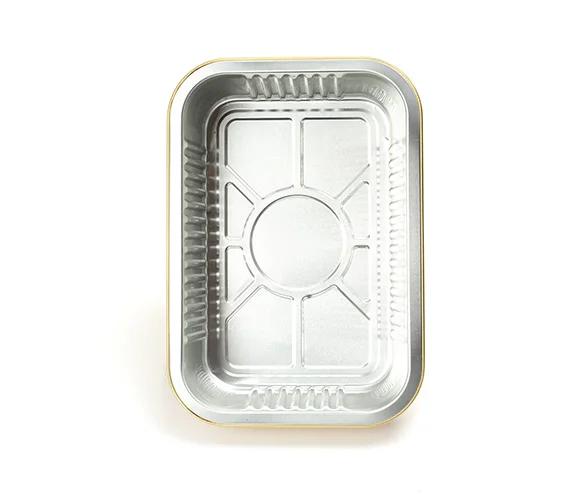
Use these references to begin a size discussion, then request confirmation of the proposed surface, film and sample combination. They are not a list of validated heat-sealable assemblies.
Make the sample trial answer purchasing questions
Agree the acceptance criteria and component revisions before trials. Have the responsible production team use the equipment instructions and the component suppliers' proposed conditions.
- Check the dry fit. Record the tray, carrier, orientation and sealing/cutting profile review before filled trials.
- Identify the materials. Record tray and film references, batches and surface specifications, together with the machine setup.
- Run the actual fill. Use the intended food, portion and filling conditions. Inspect the rim before sealing and assess packs from the relevant cavities and stages of the run.
- Follow the pack through use. Include the specified cooling, storage, transport and opening sequence; add heating only where the components' use instructions permit it.
Record observations separately from conclusions:
| Observation | Purchasing question to resolve |
|---|---|
| Tray fits, but corners or sections of the seal are incomplete | Have the profile, support, materials and process been assessed together? |
| A seal is formed, but opening tears the film or deforms the tray | Does opening meet the agreed requirement for this food and user? |
| Initial packs pass, but results change during the run or after storage | Is performance repeatable through the proposed production and distribution sequence? |
Keep the settings, test methods, sample identities and outcomes with an approved reference pack. A sealed appearance alone does not validate shelf life or a modified-atmosphere claim.
Send a useful compatibility brief
To discuss candidate trays with FirstAlu, prepare:
- Current tray or drawing, target portion and dimensions that must stay fixed.
- Machine model, tool references and any restrictions on tooling changes.
- Film manufacturer and grade, sealing side, roll details and required opening behaviour.
- Food, fill conditions, storage/distribution sequence, destination and any reheating requirement.
- Trial date, sample quantity, forecast order volume and documents required for review.
Use the heat-sealing compatibility brief to organise the information, then contact FirstAlu, quoting a relevant tray reference. Request the available candidate specification and sample arrangements; agree tray, film and tooling responsibilities before committing to a bulk order.